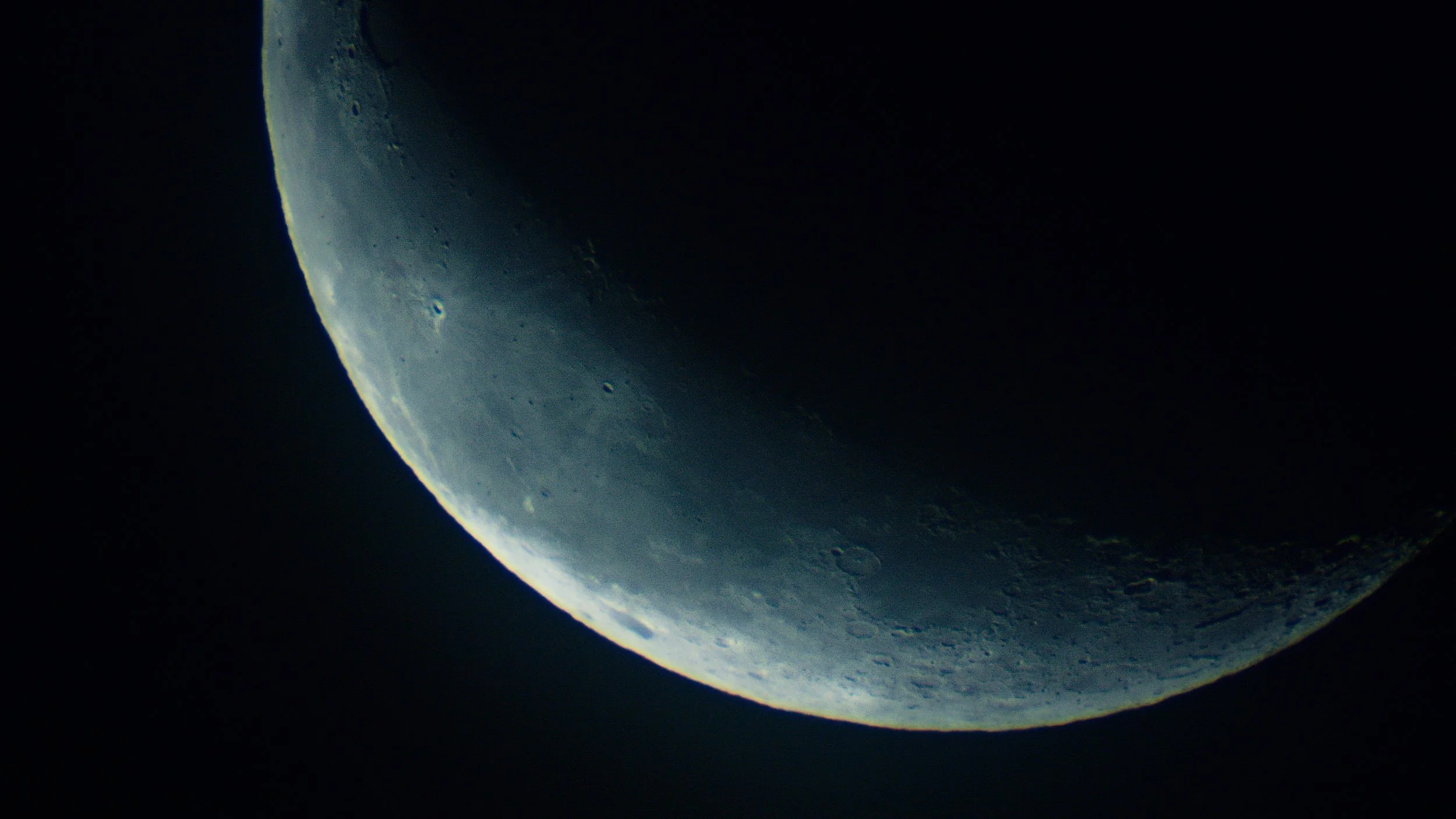
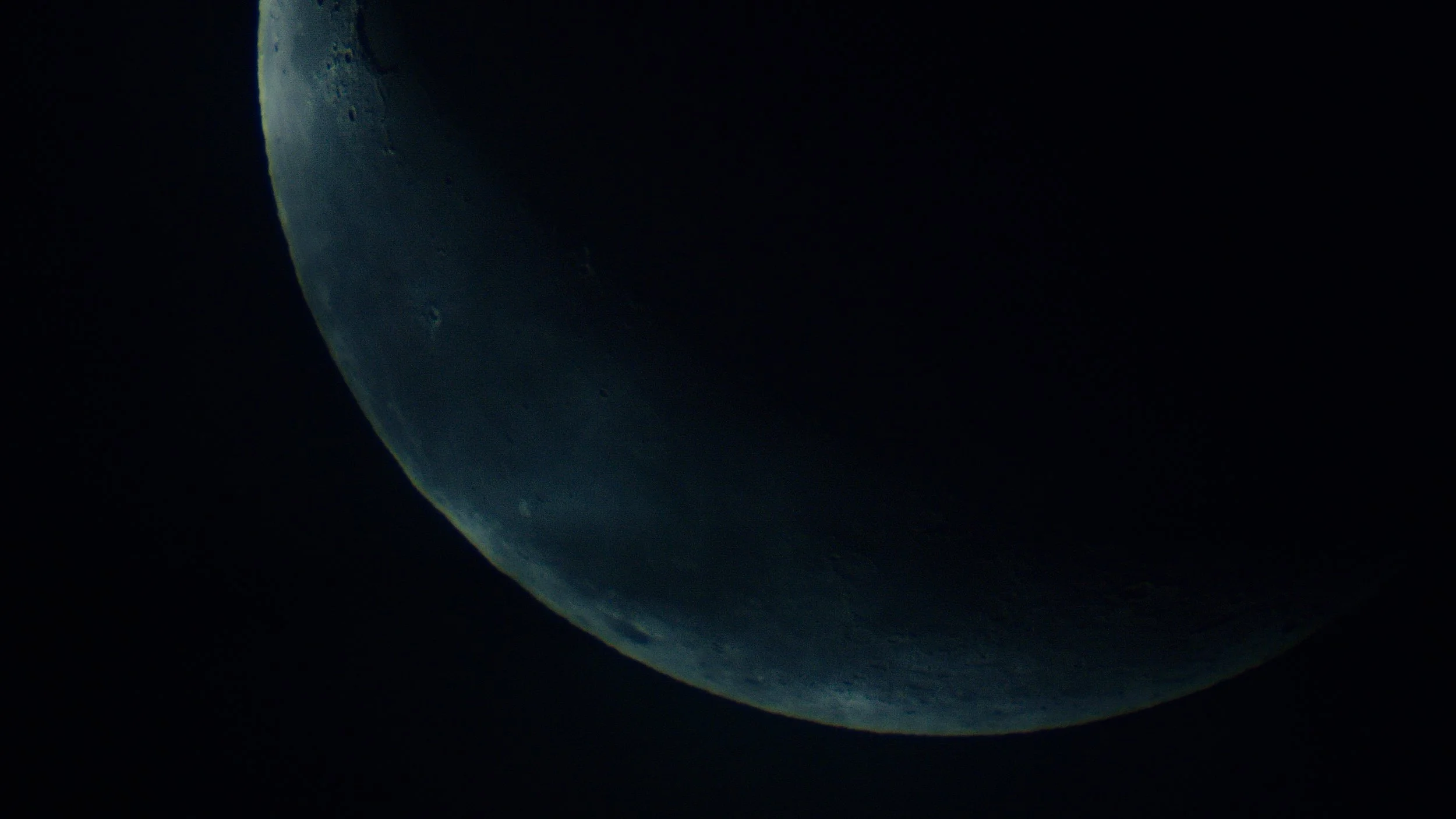
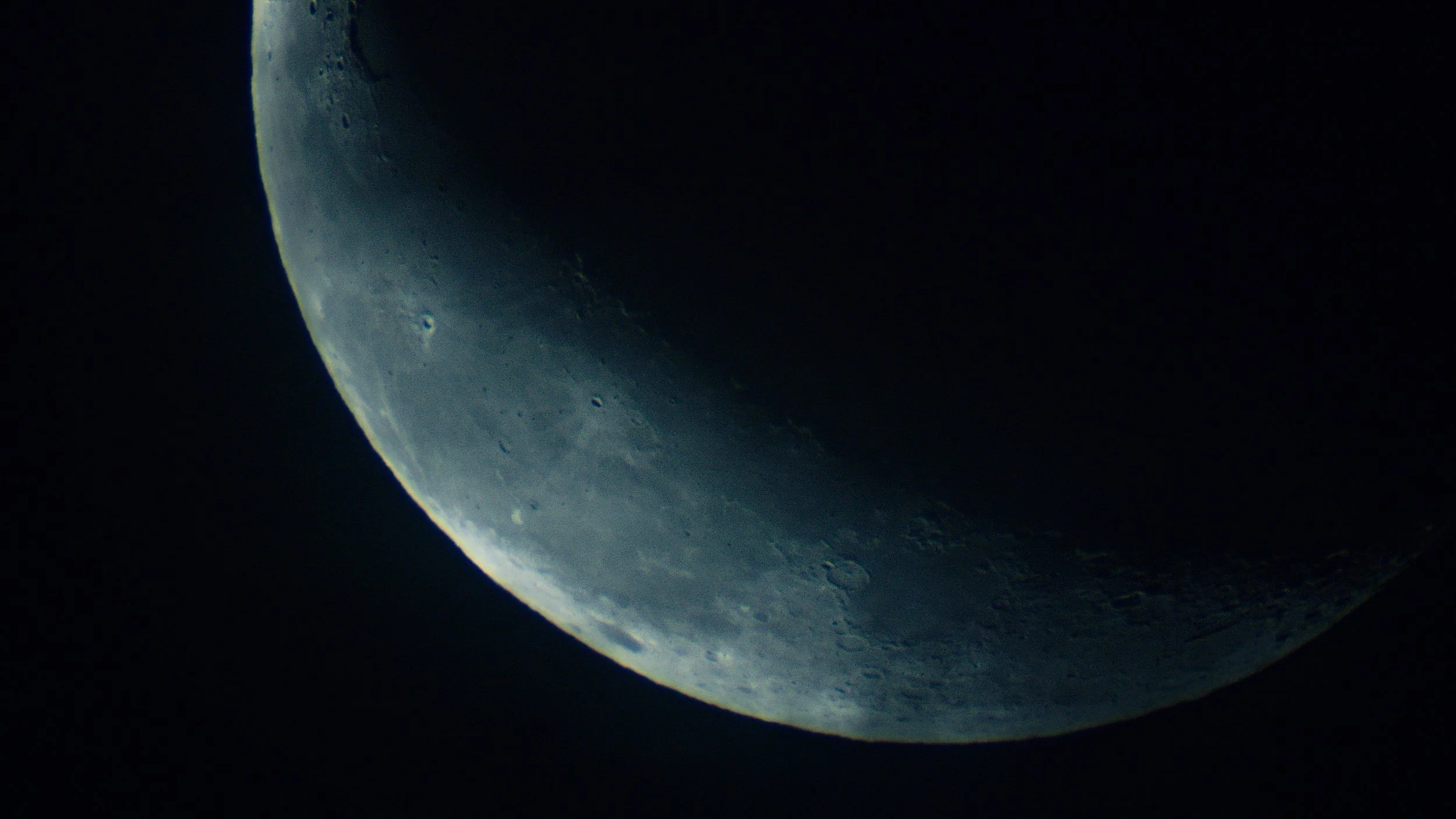
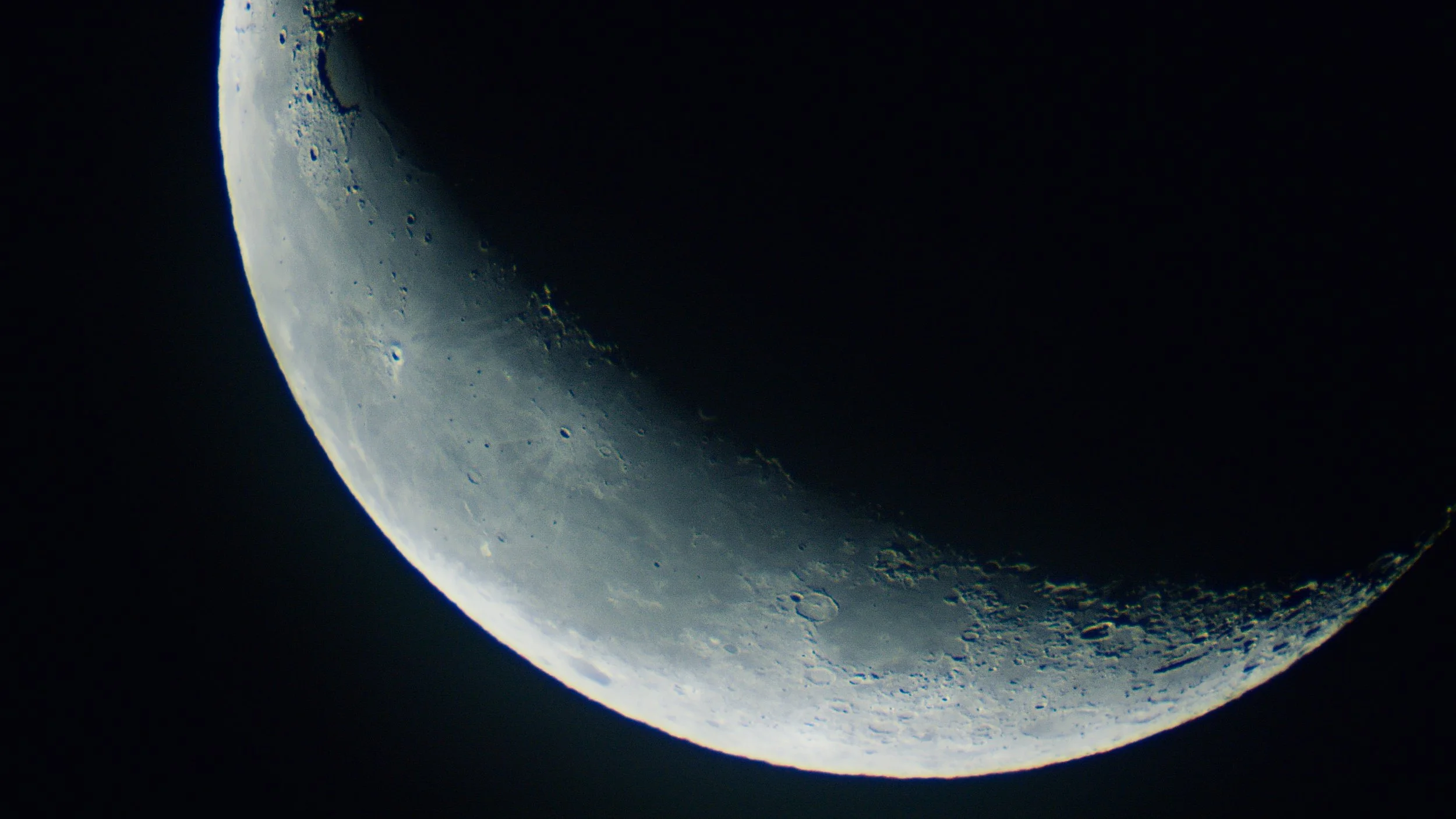
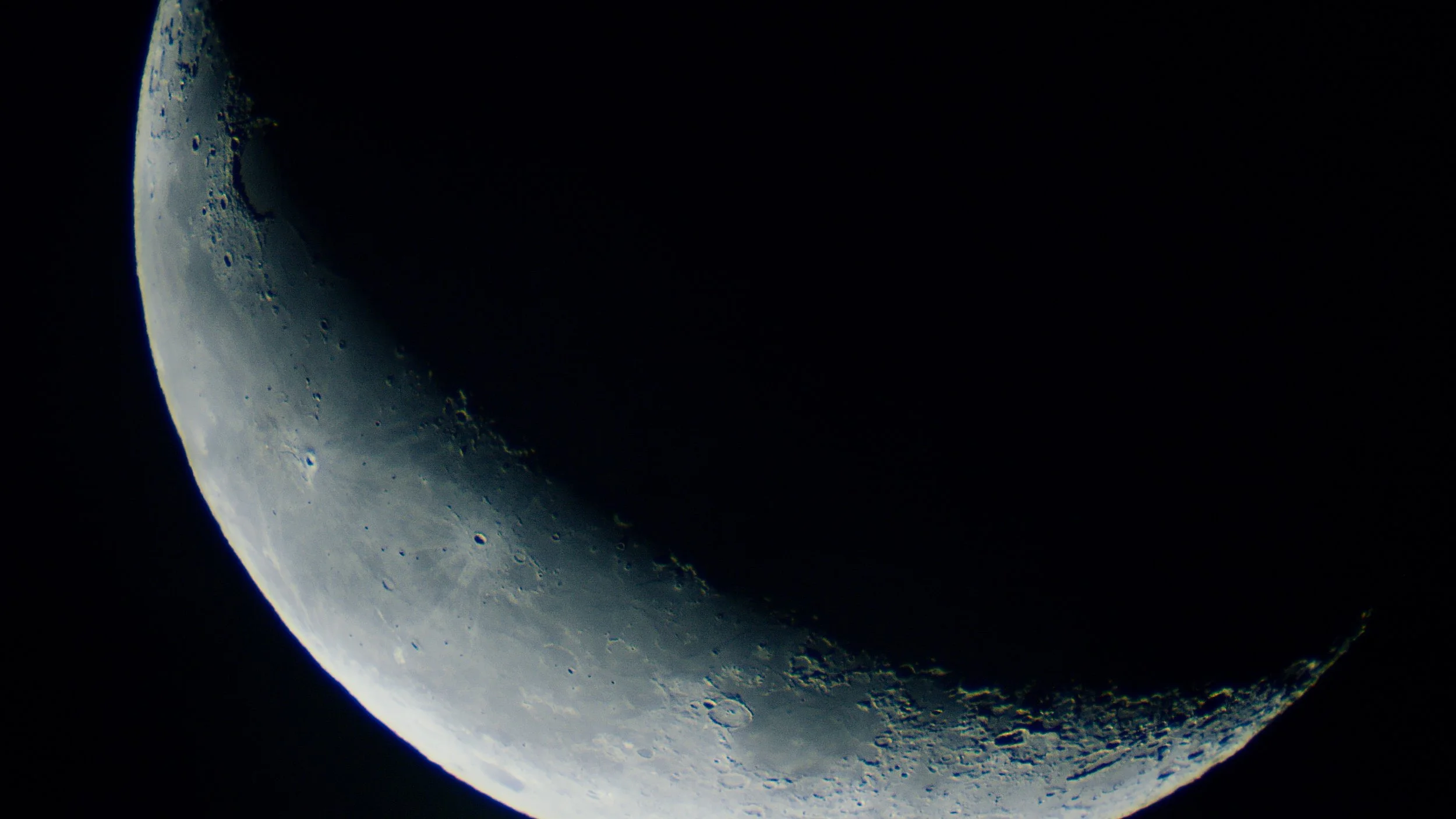
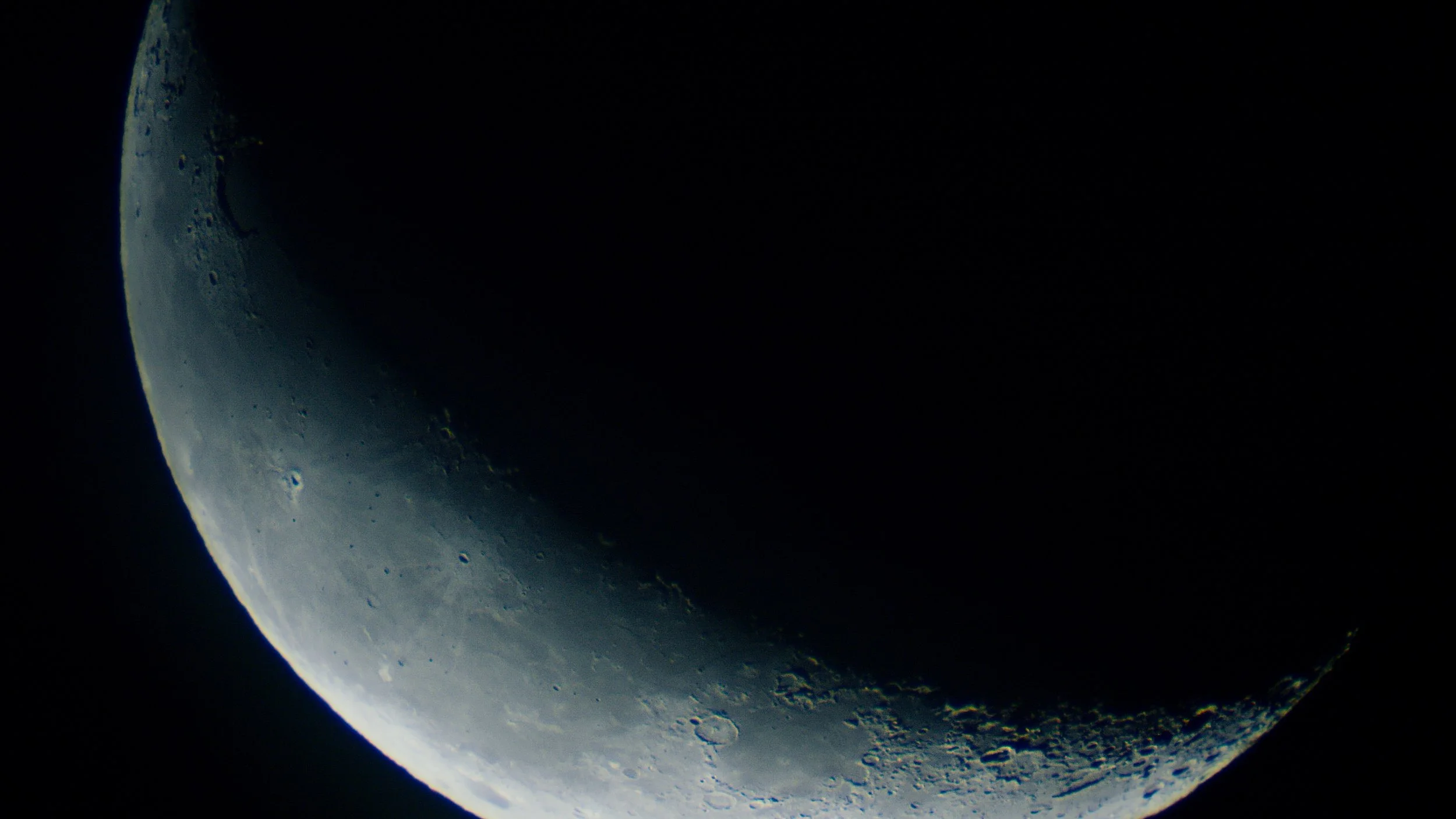
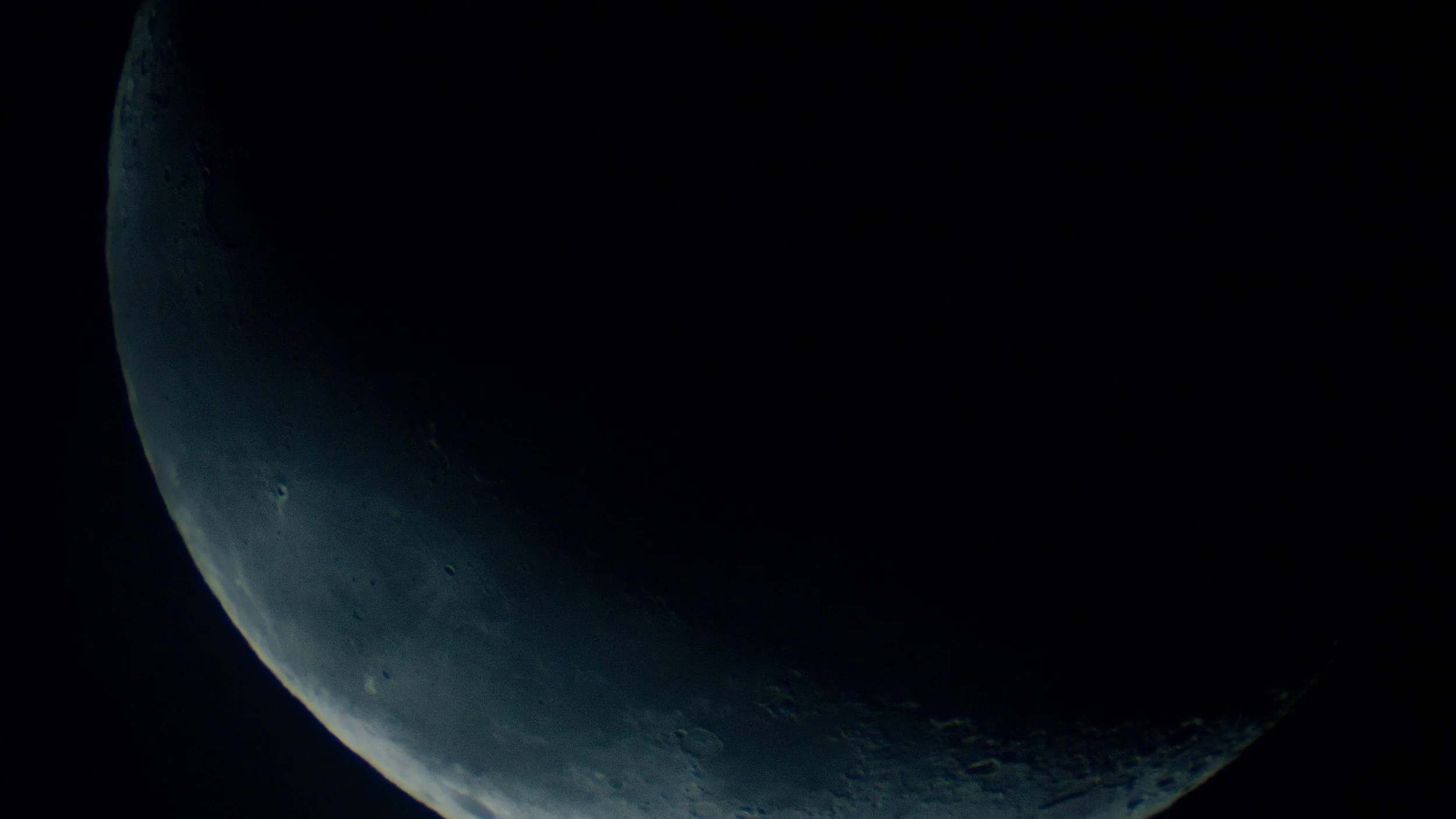
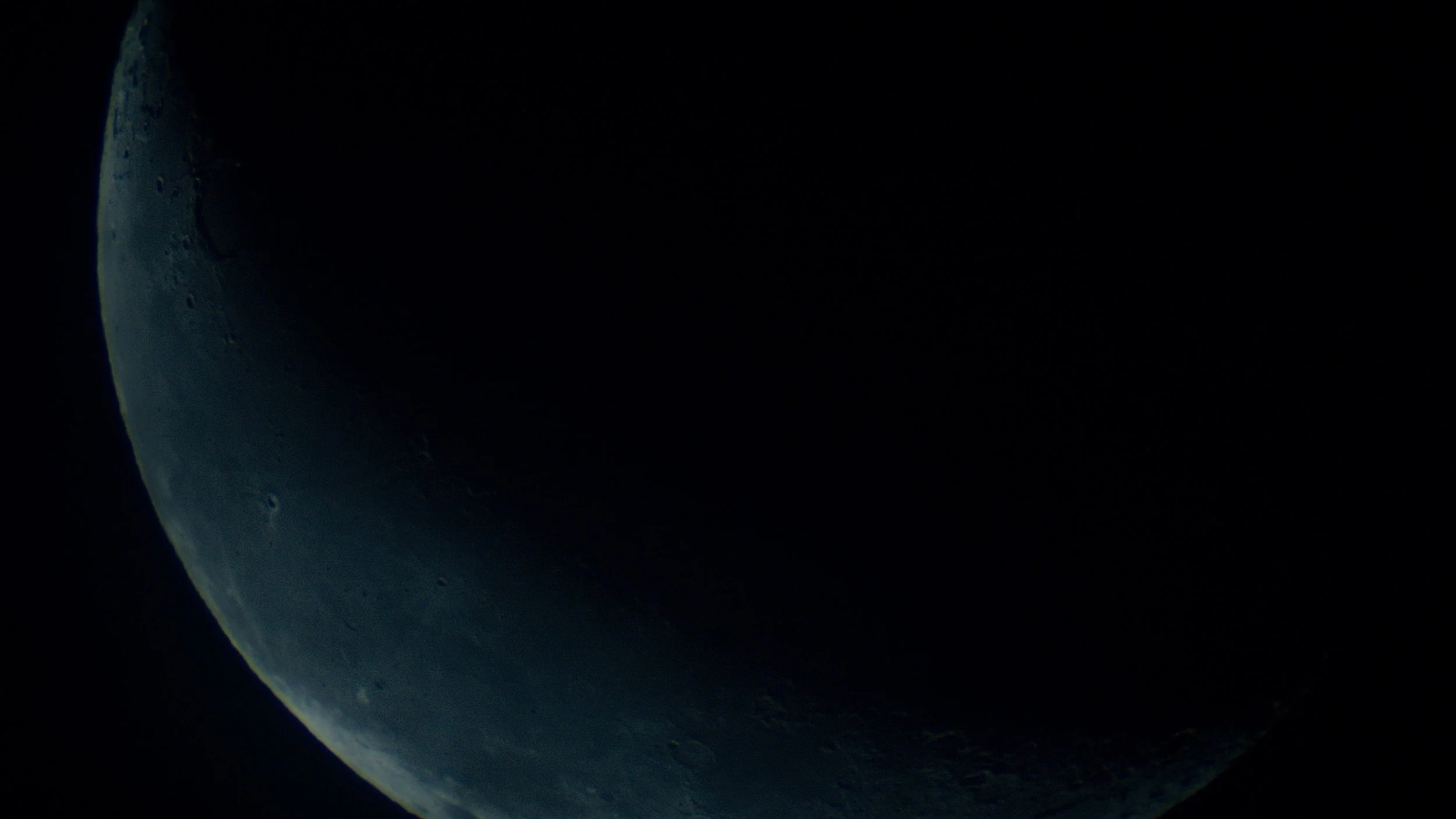
OLD MOON NEW MOON, 2026
Single channel film. 4K. Color. Stereo sound. Duration: 12 min.
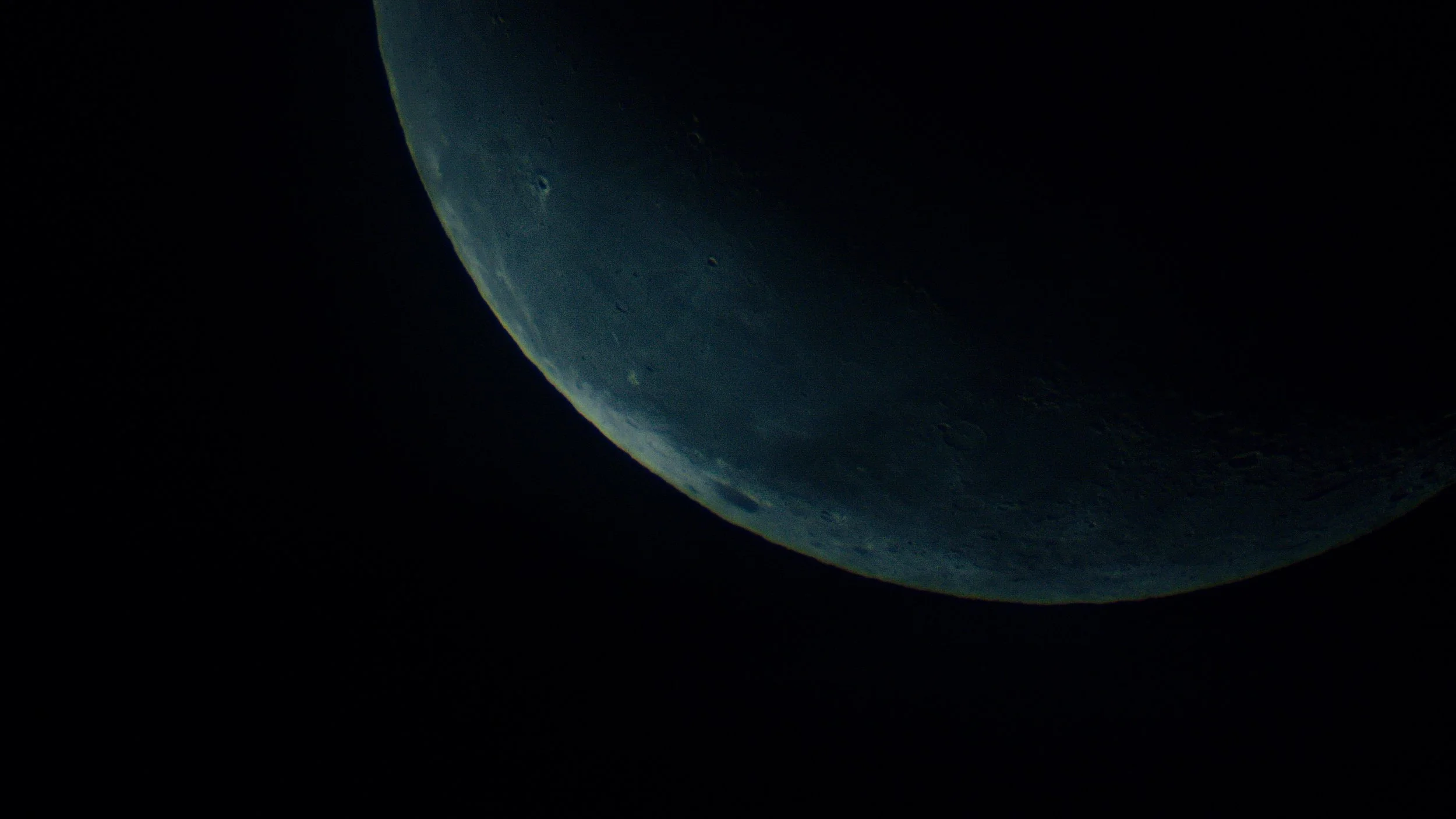
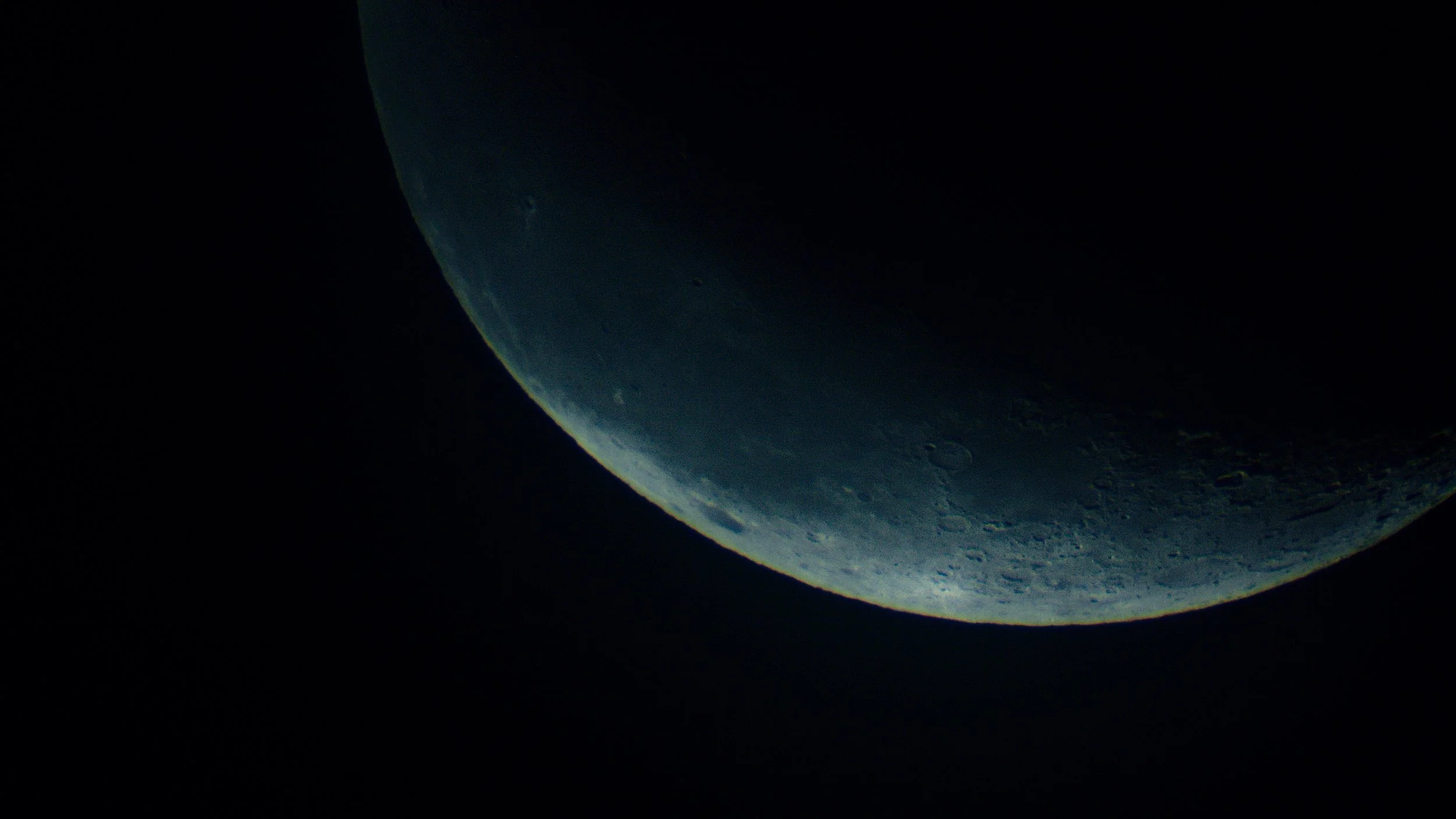
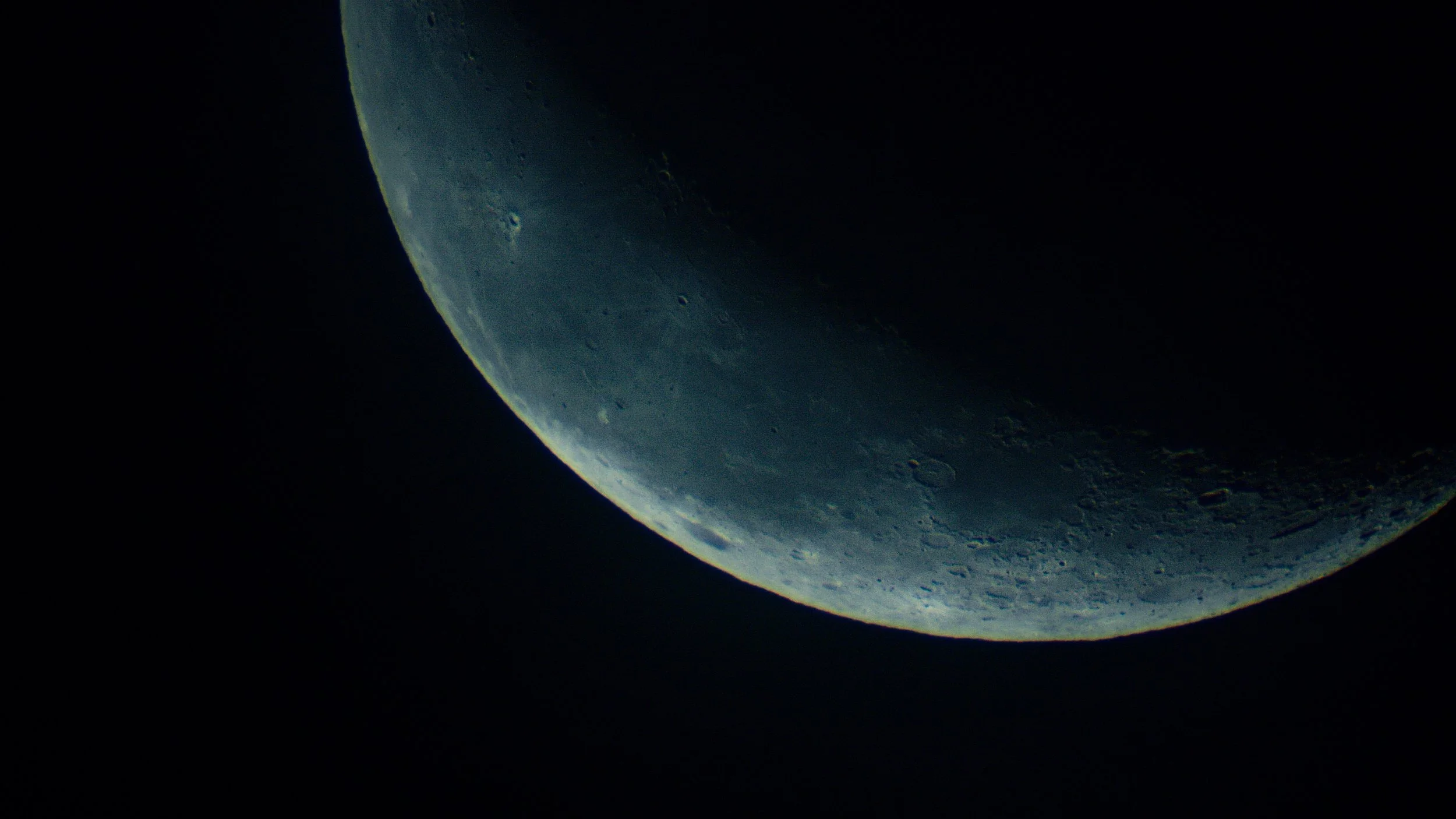
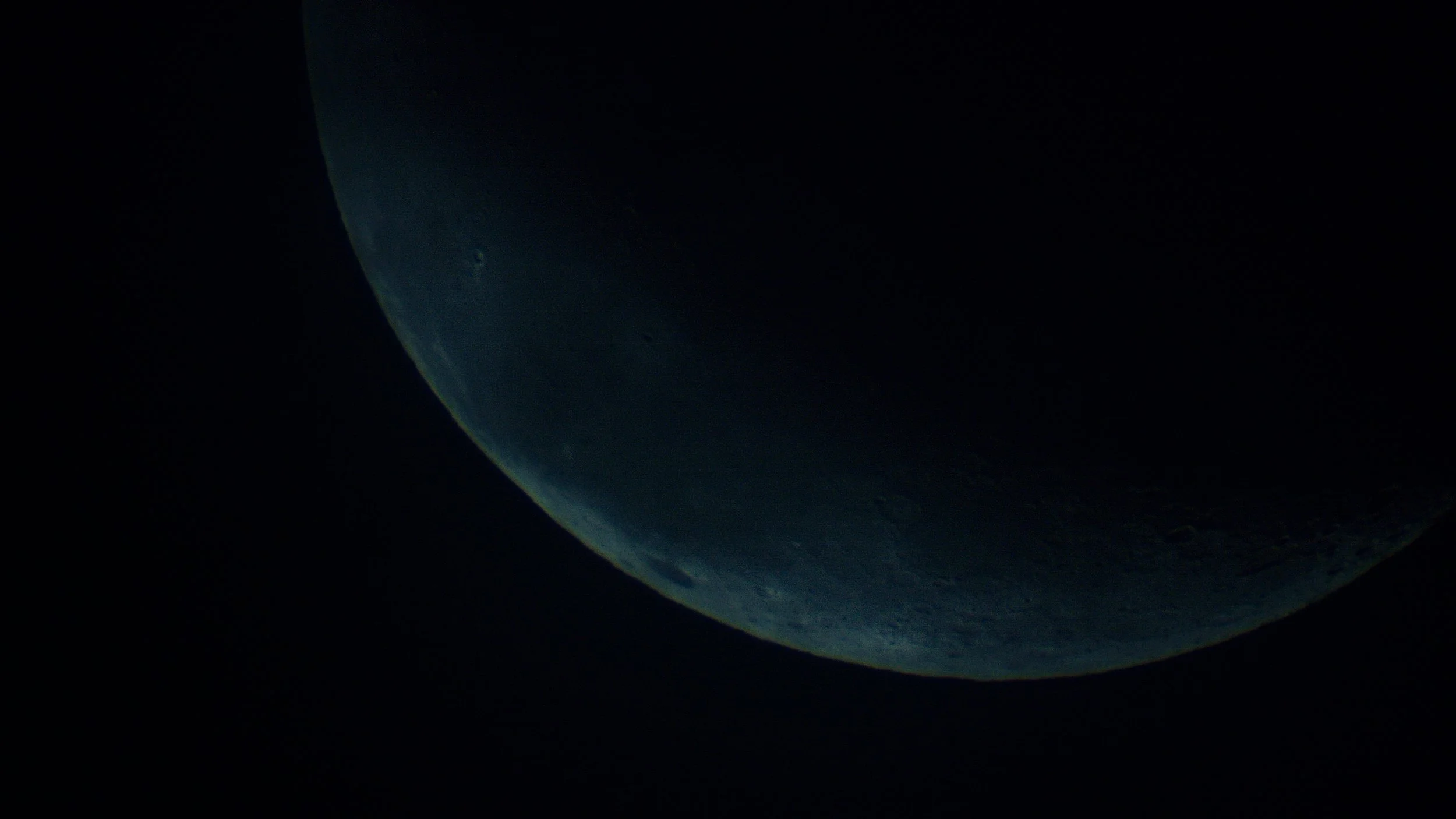
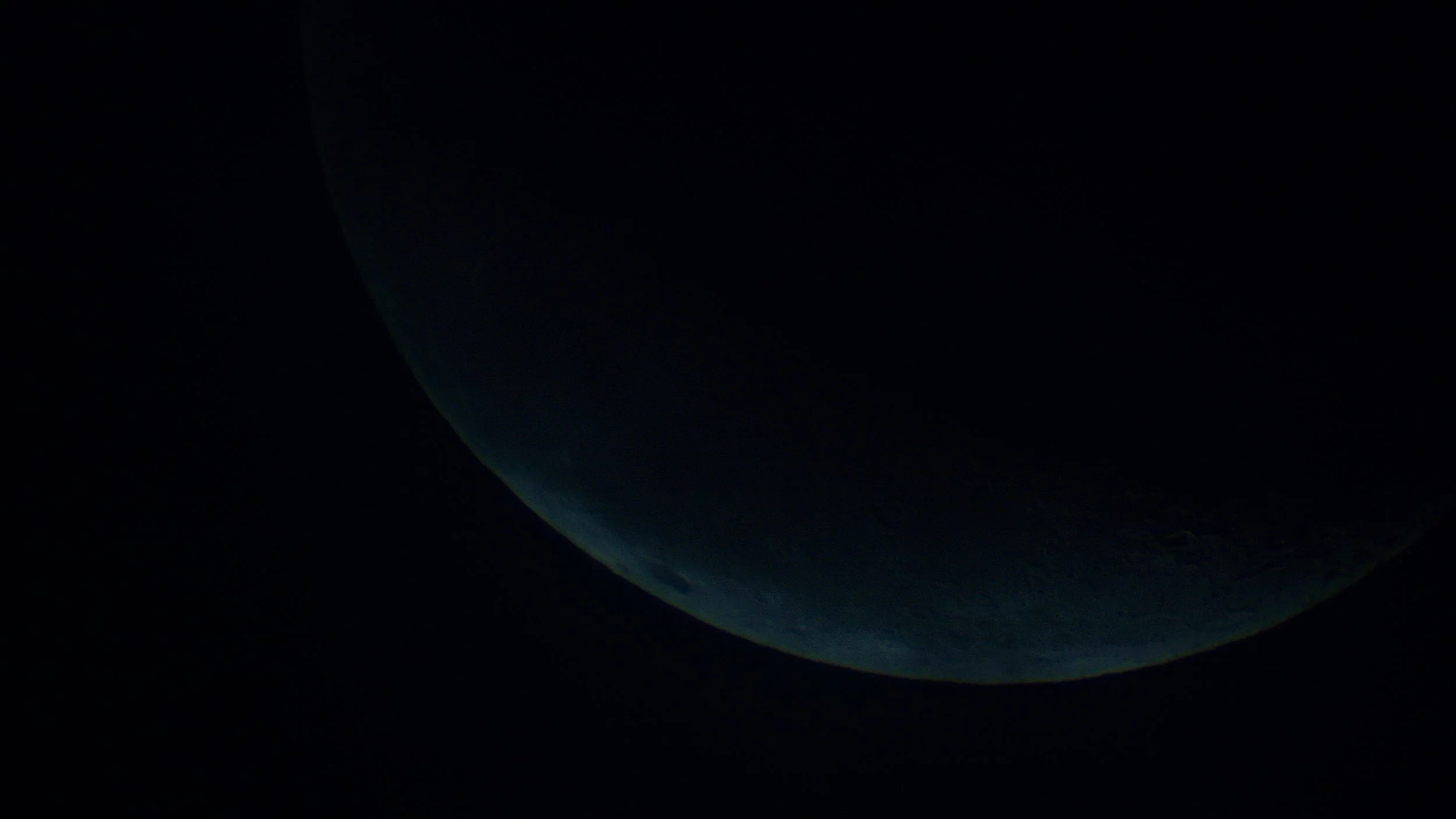
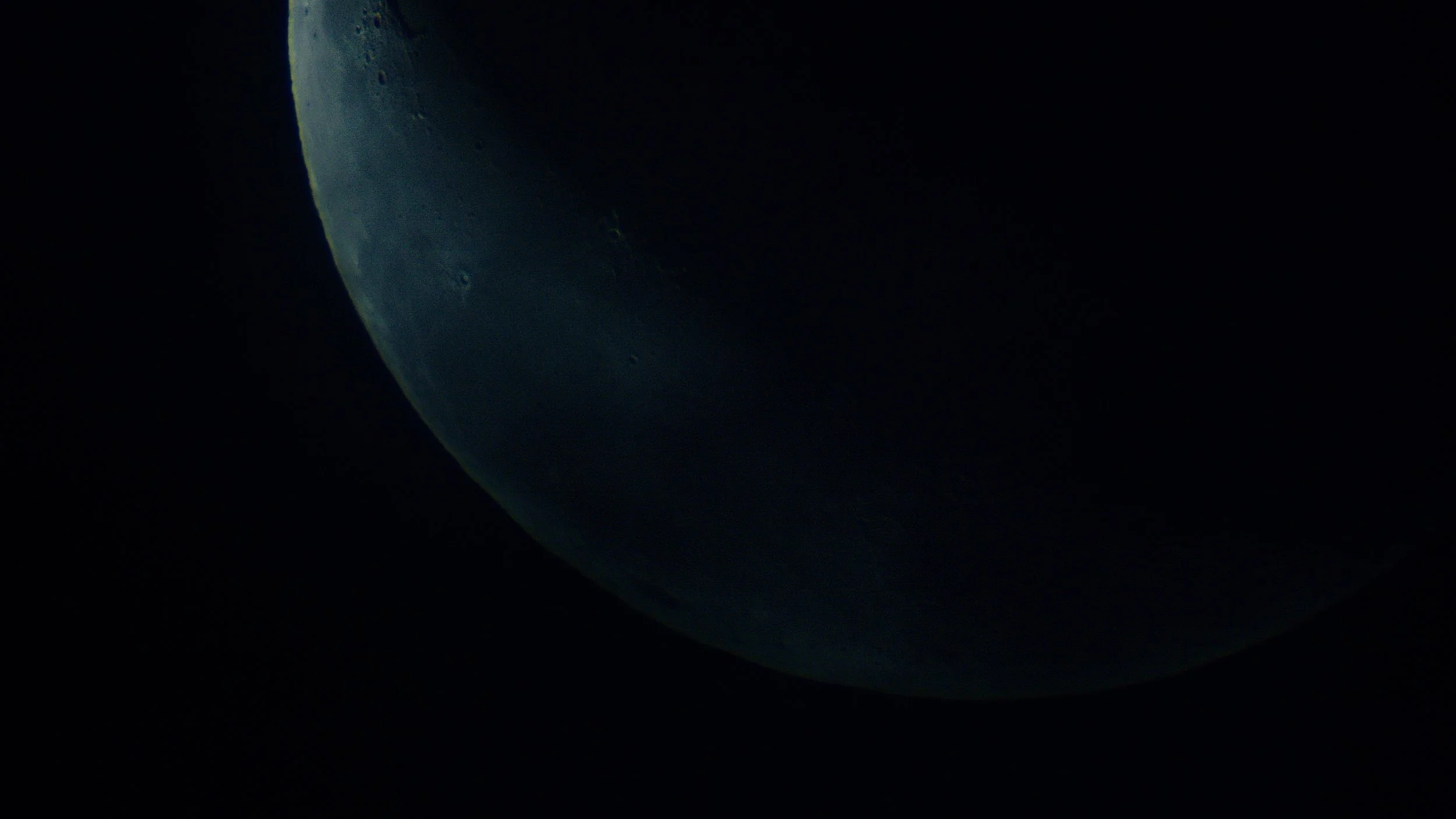
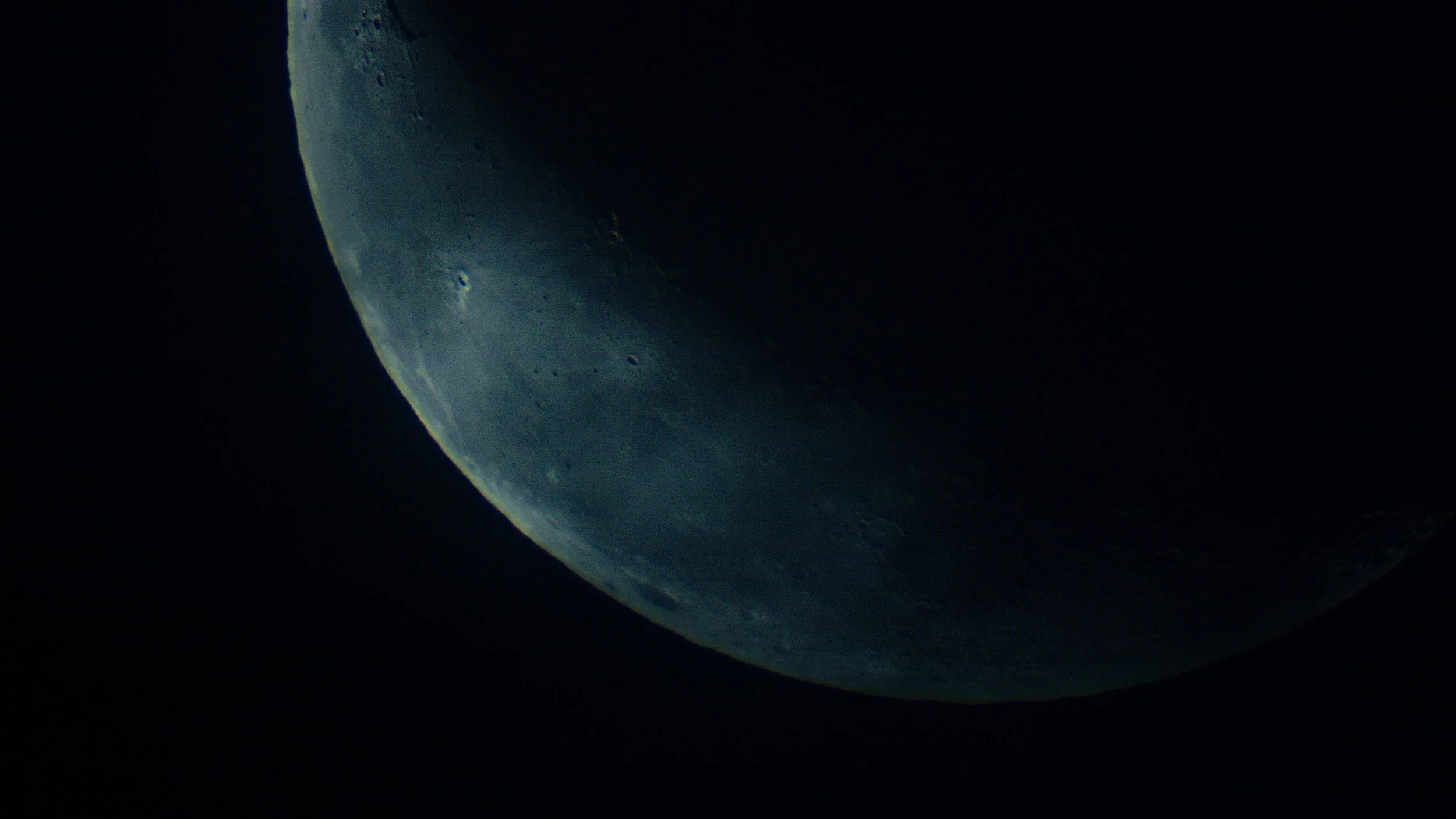
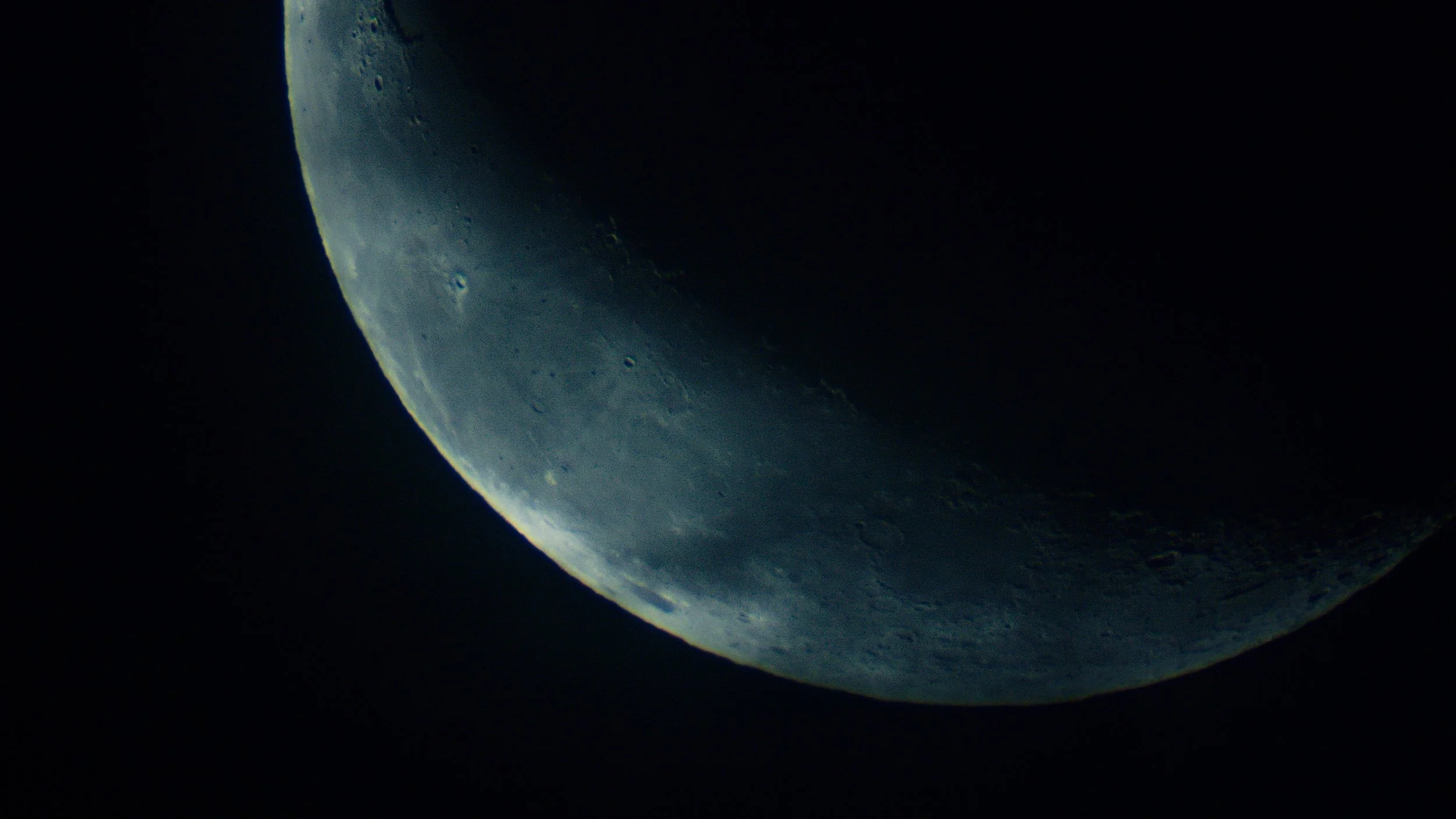
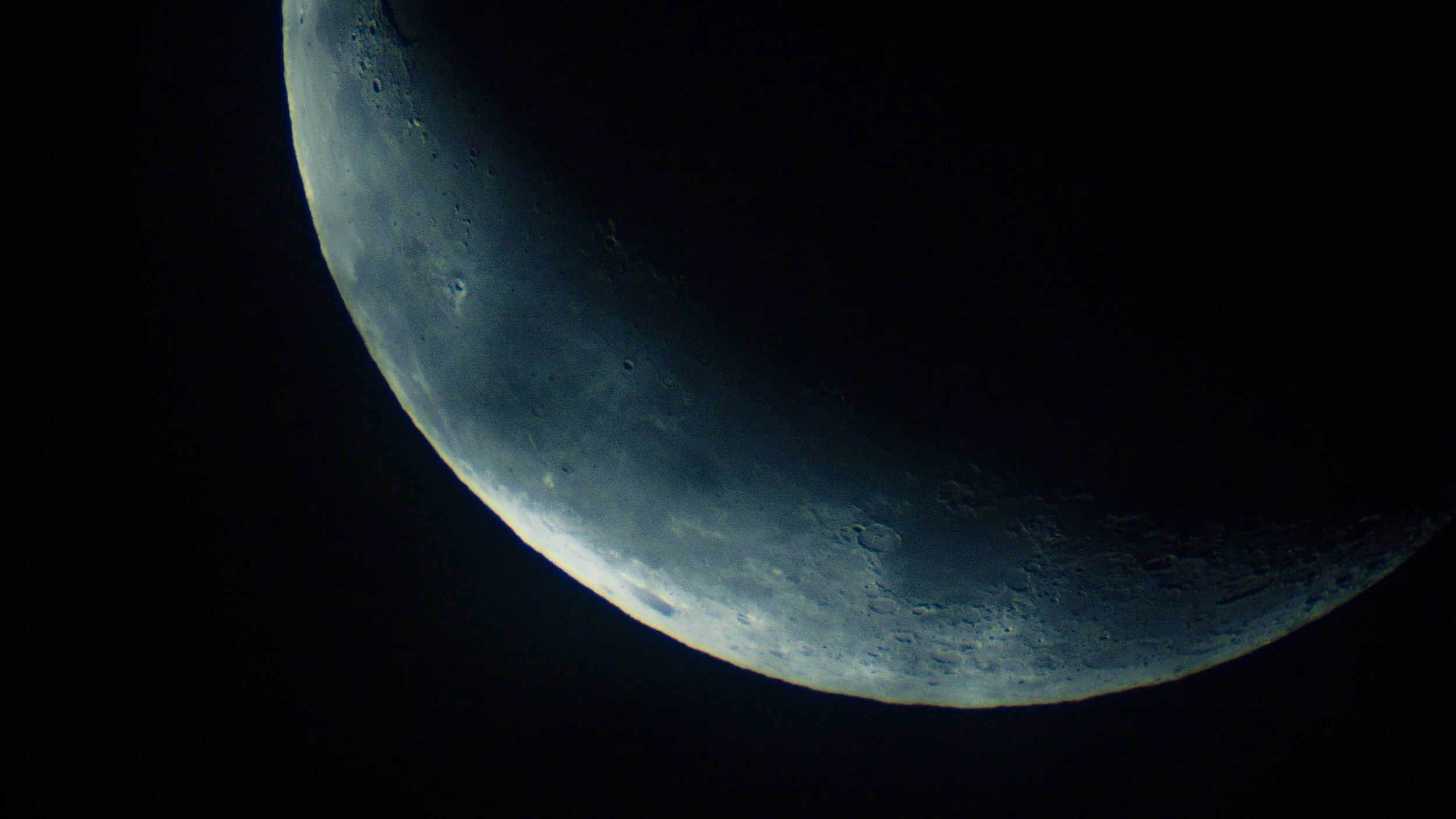
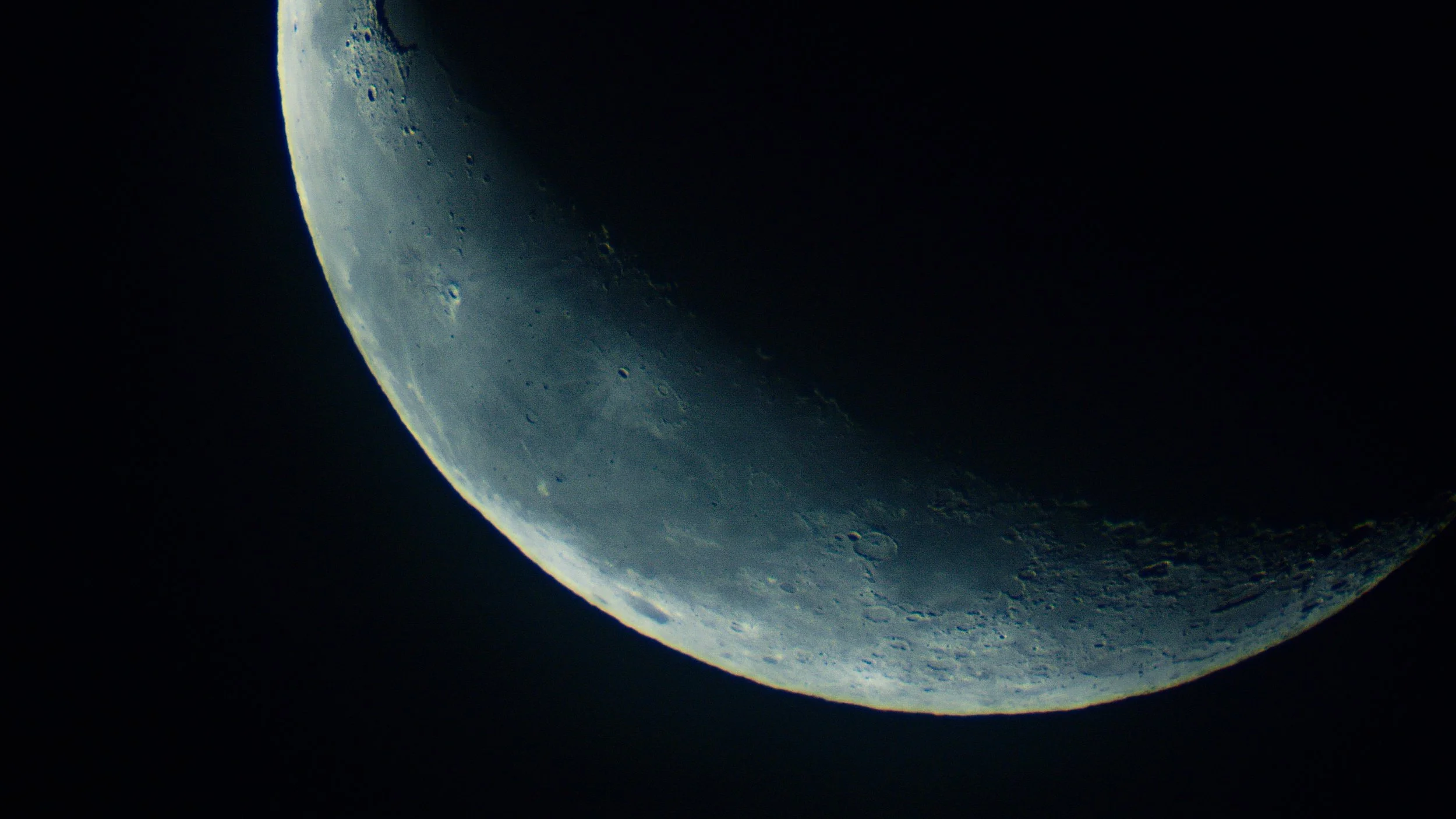
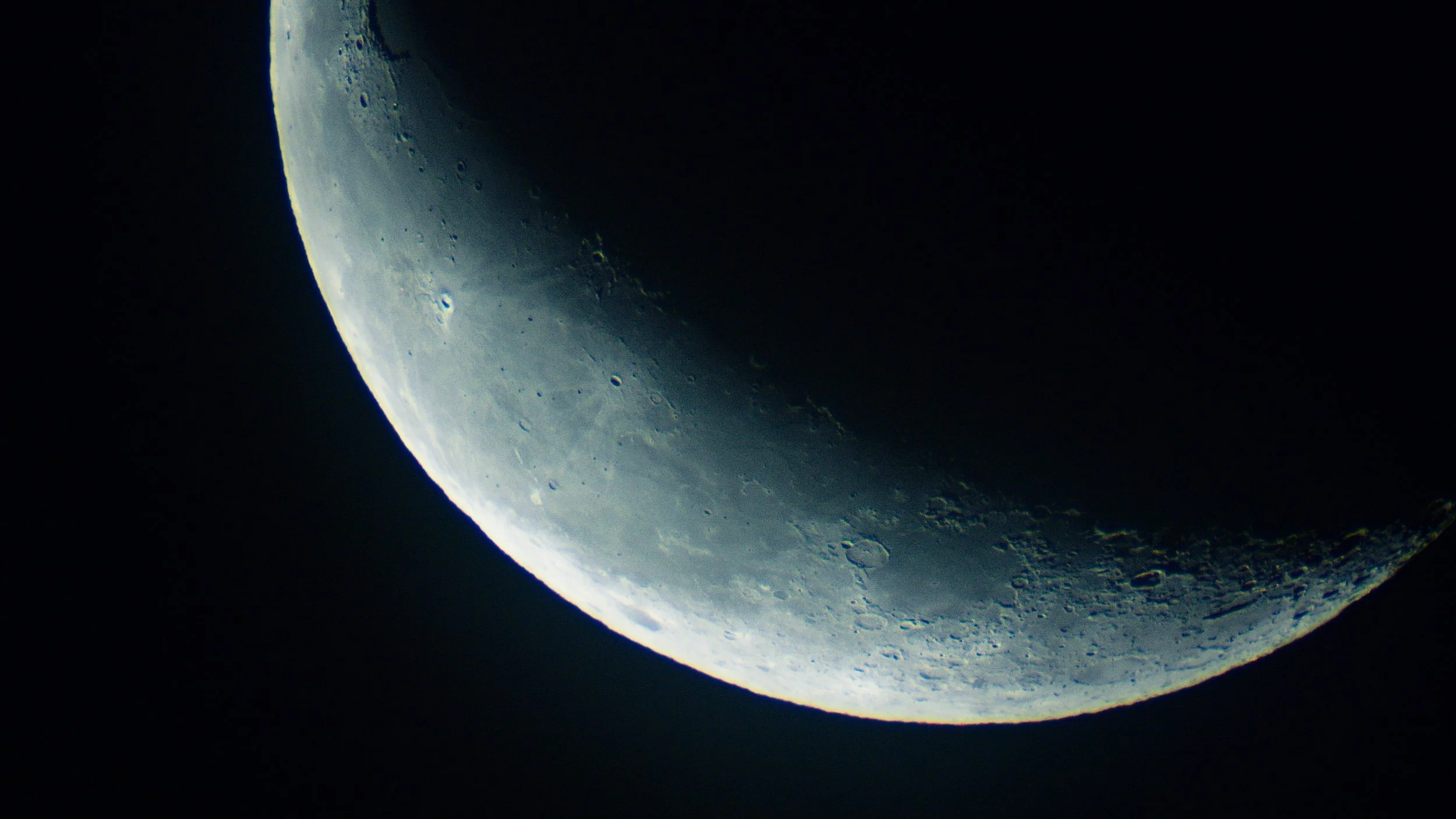
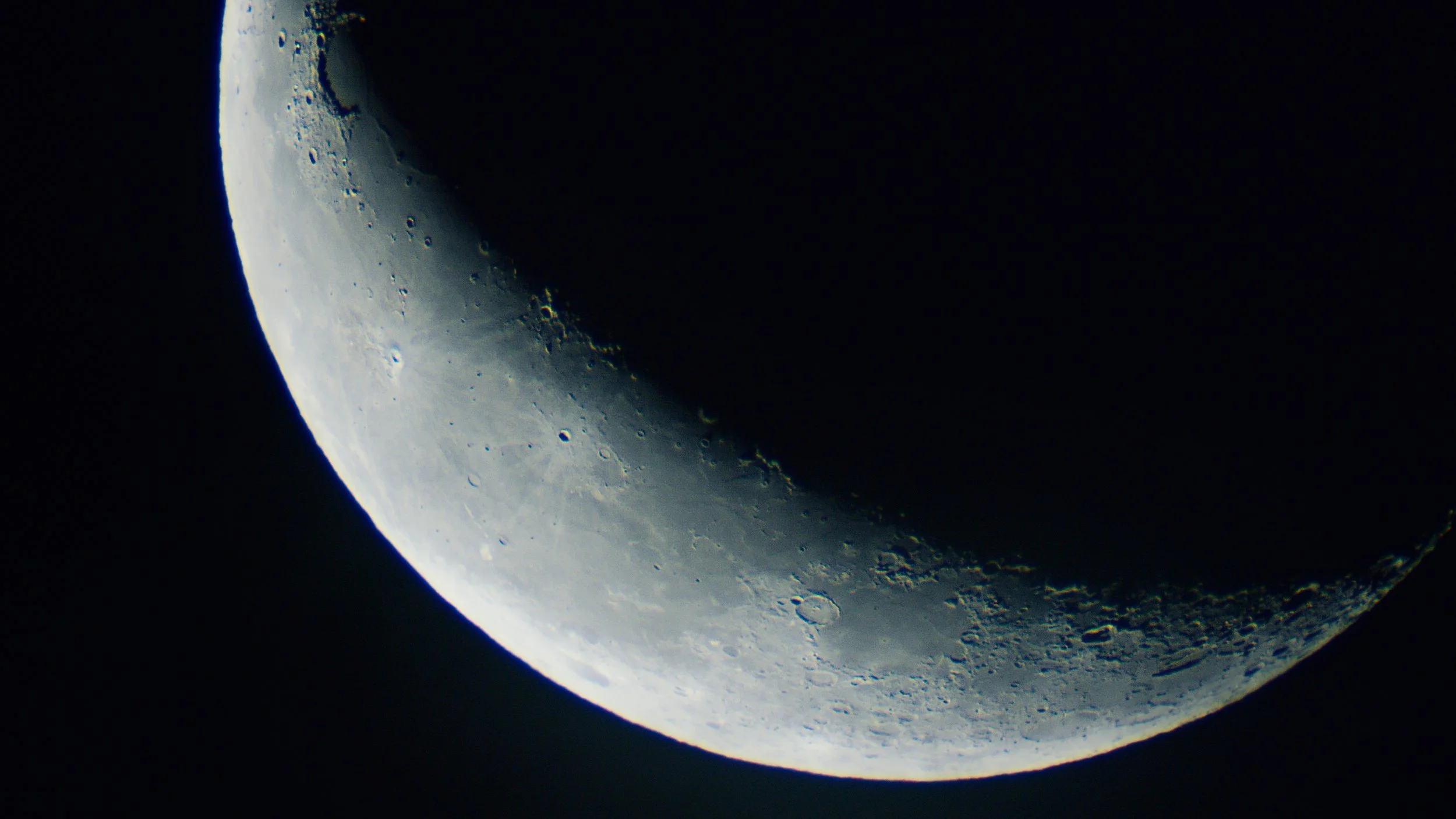
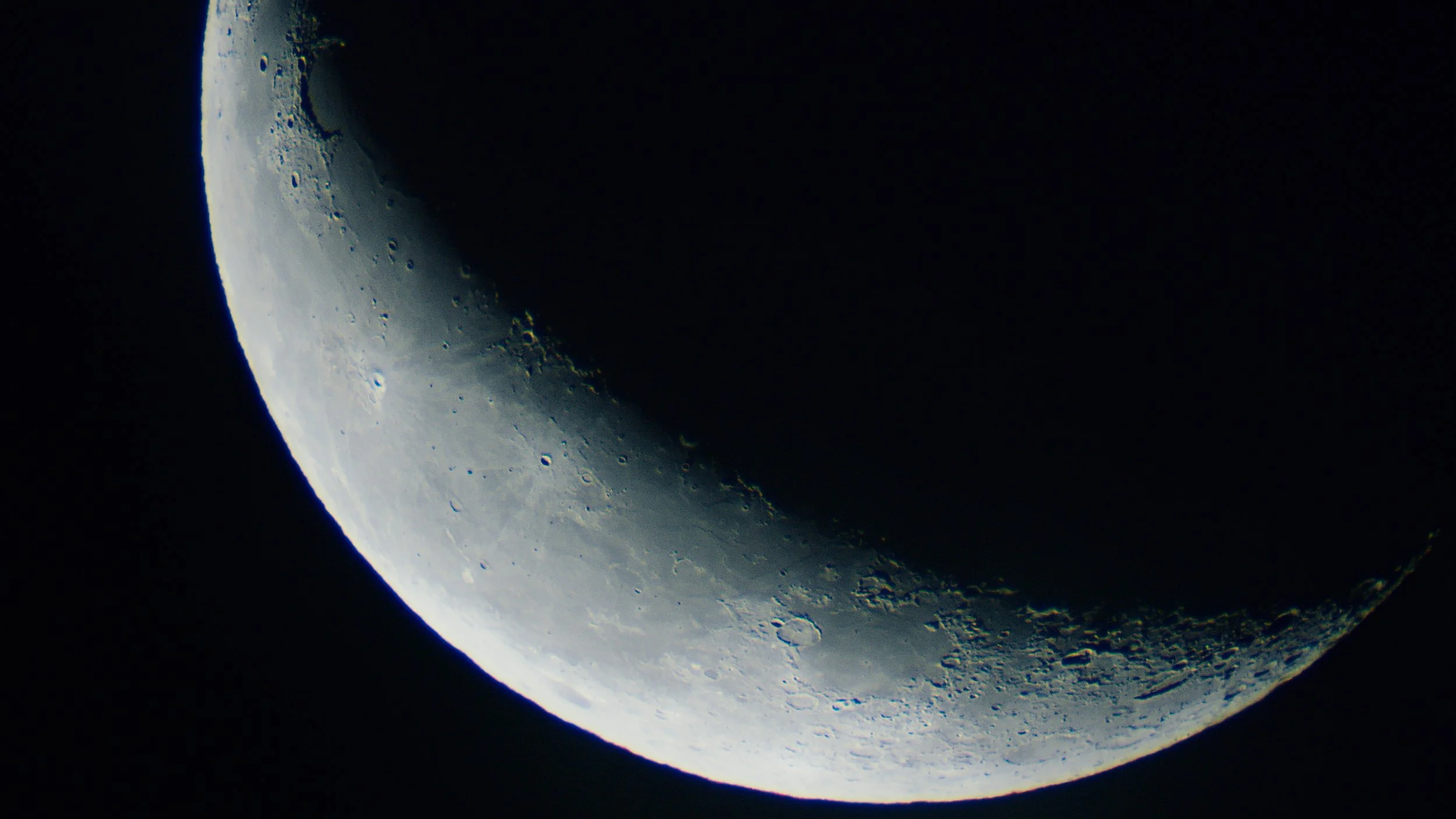
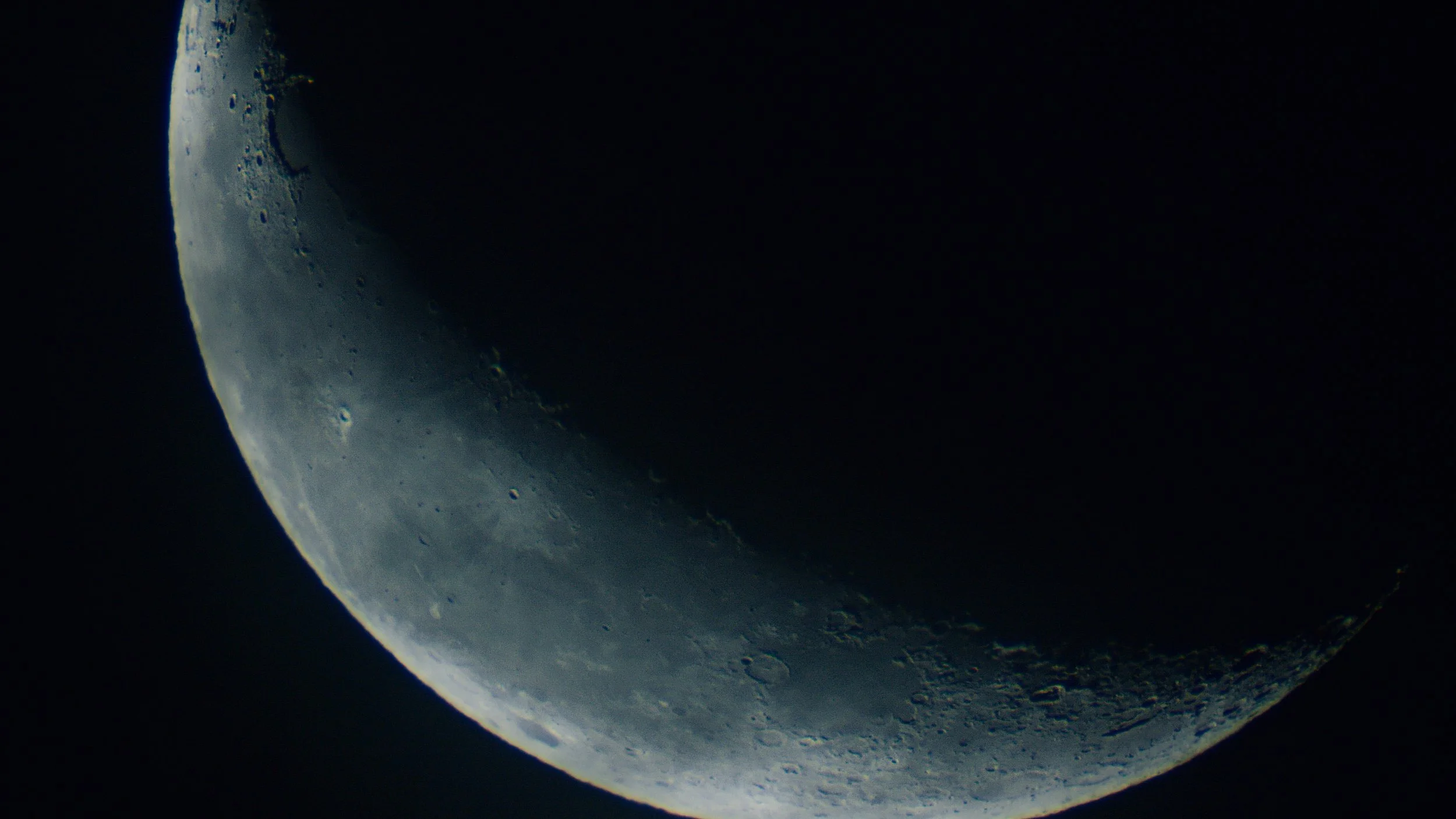
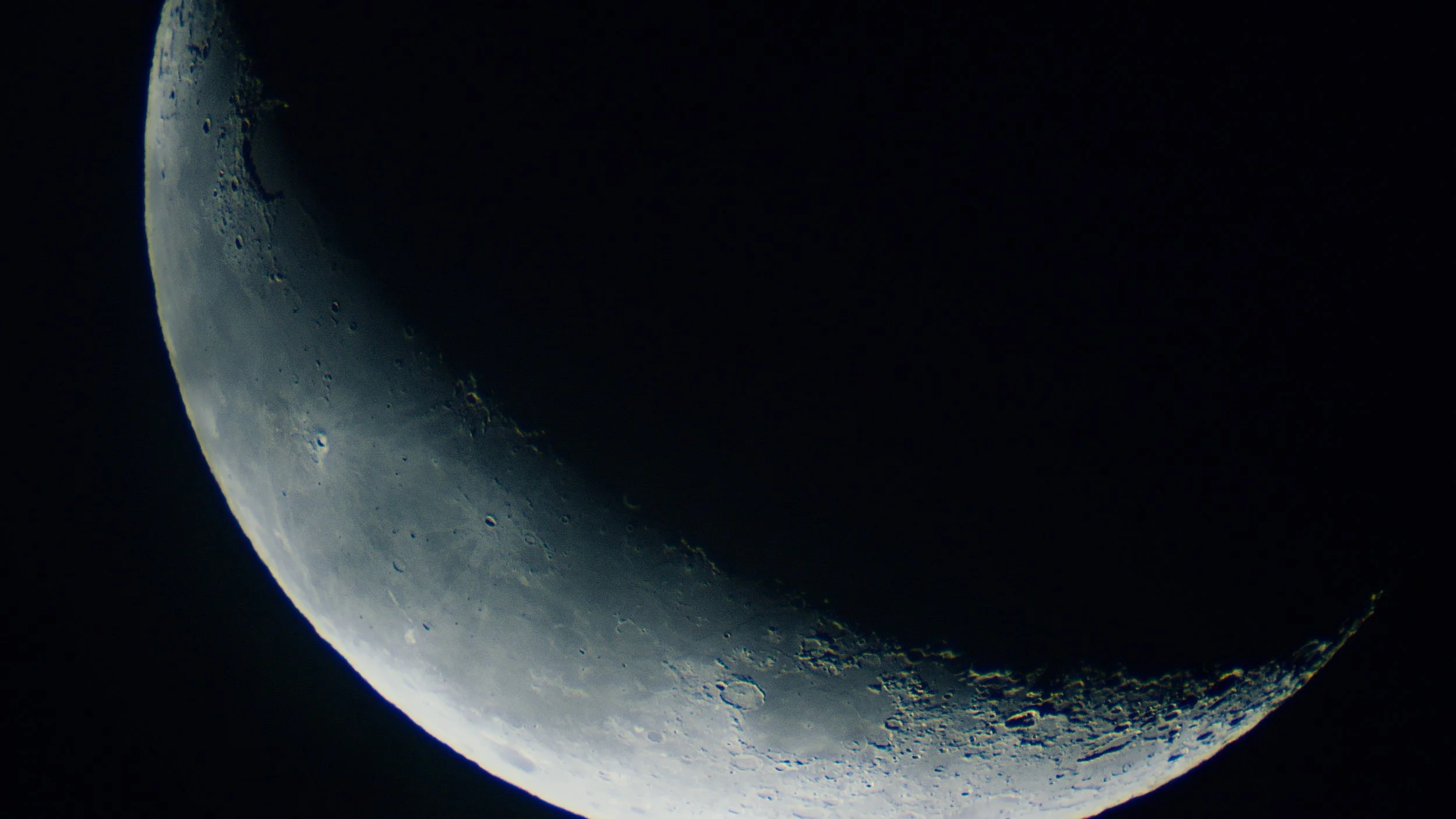
Old Moon – New Moon traces the waning crescent moon on its cyclical journey toward the new moon. Since ancient times, the moon has been a primary source of light in the night sky, inspiring wonder and capturing the human imagination. A magnificent force, it connects people across geographies while setting the ocean’s currents and tides in motion.
Alluding to both eternity and ephemerality, the twelve phases of the moon, and the cyclical nature of time, Old Moon – New Moon is a twelve-minute, single-take film recorded from Rundetårn (est. 1637) in Copenhagen, the oldest functioning observatory building in Europe. An 8K digital camera is mounted onto the observatory’s 1929 refracting telescope, producing a grainy image that recalls vintage footage of the first moon landing. The accompanying music, composed from field recordings of the historic telescope, further accentuates the work’s analogue and tactile qualities.
Old Moon – New Moon makes a subtle reference to Korean video artist Nam June Paik’s Moon is the Oldest Television(1965), and to the idea of the moon as a primal “screen” for contemplation and imagination - one that predates television and other forms of modern media. Kaisen similarly explores media genealogies that extend beyond technological invention, tracing how humans have used, interpreted, and projected meaning onto celestial bodies and natural phenomena across different times and cultures.
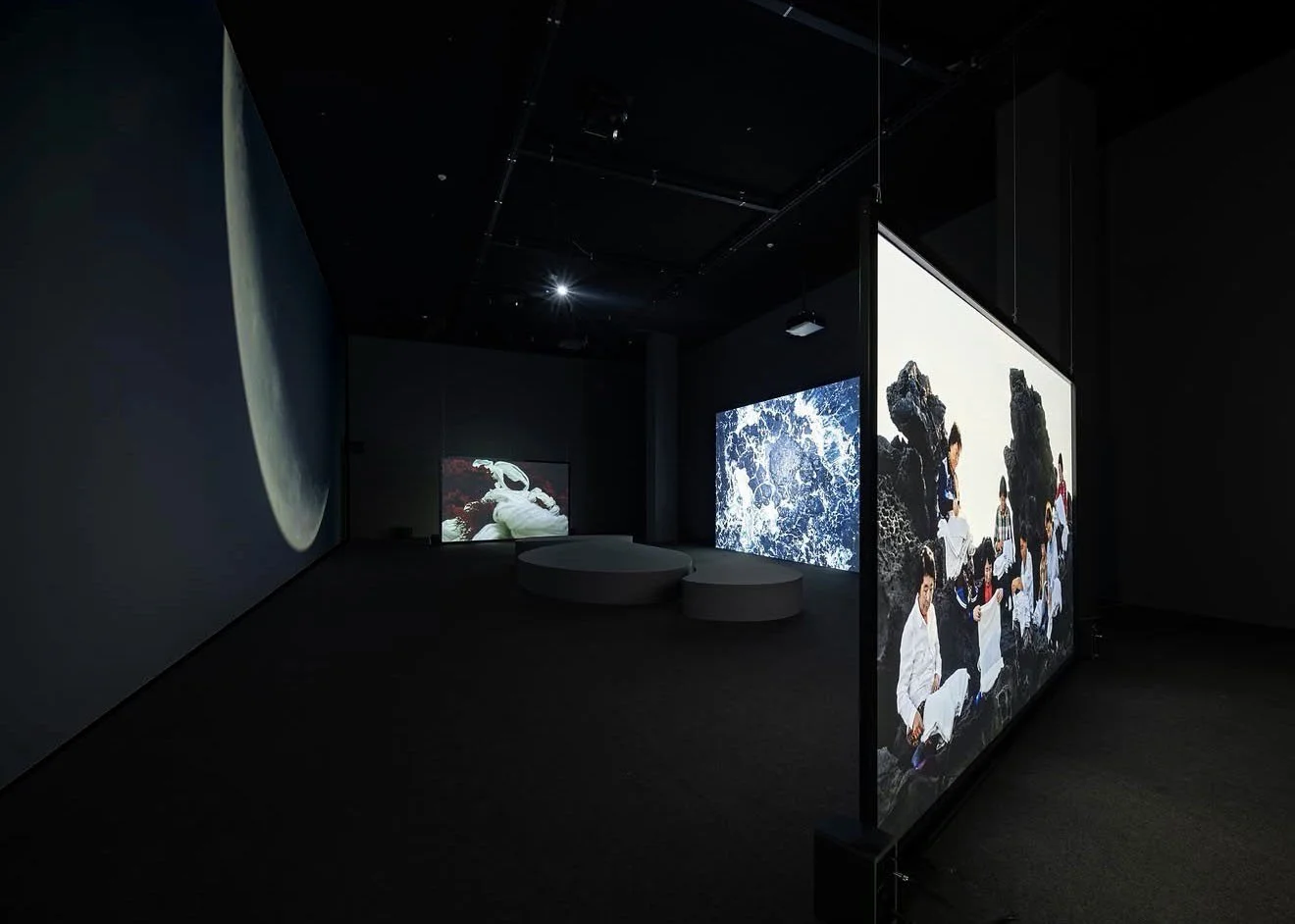
Installation view: 𝘏𝘺𝘶𝘯𝘥𝘢𝘪 𝘛𝘳𝘢𝘯𝘴𝘭𝘰𝘤𝘢𝘭 𝘚𝘦𝘳𝘪𝘦𝘴: 𝘝𝘪𝘢 𝘚𝘢𝘵𝘦𝘭𝘭𝘪𝘵𝘦. Photo. Cheolki Hong
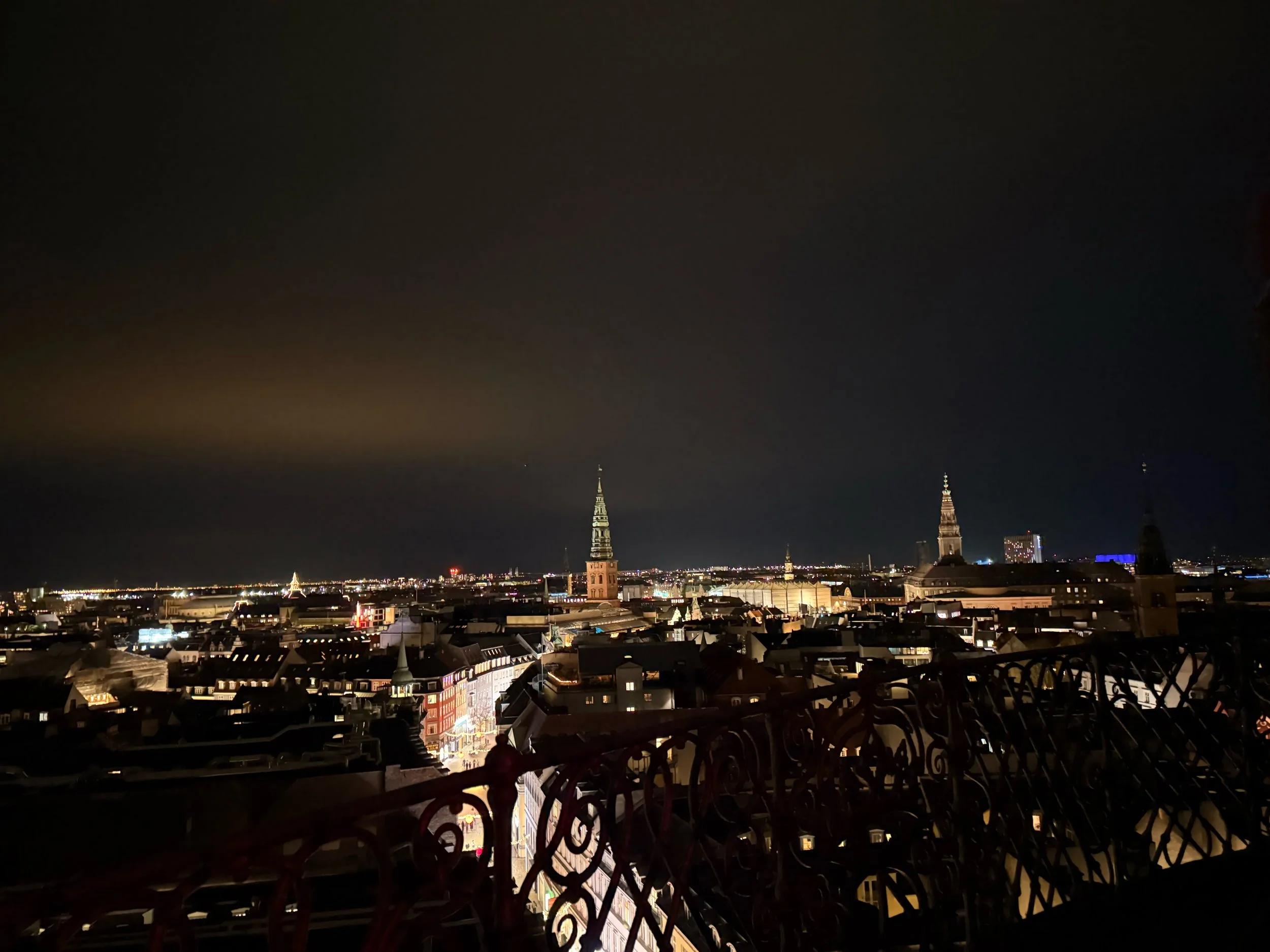
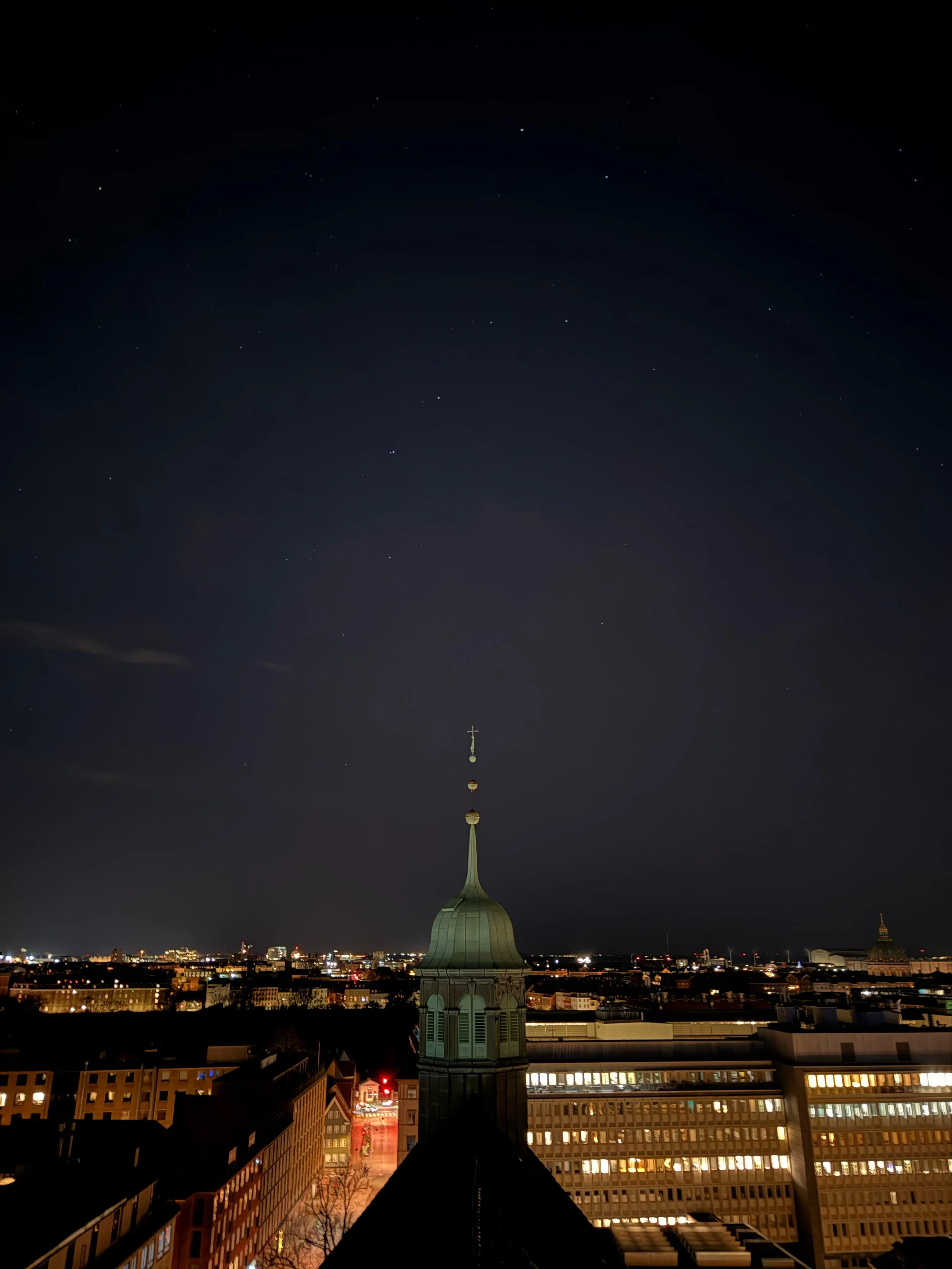
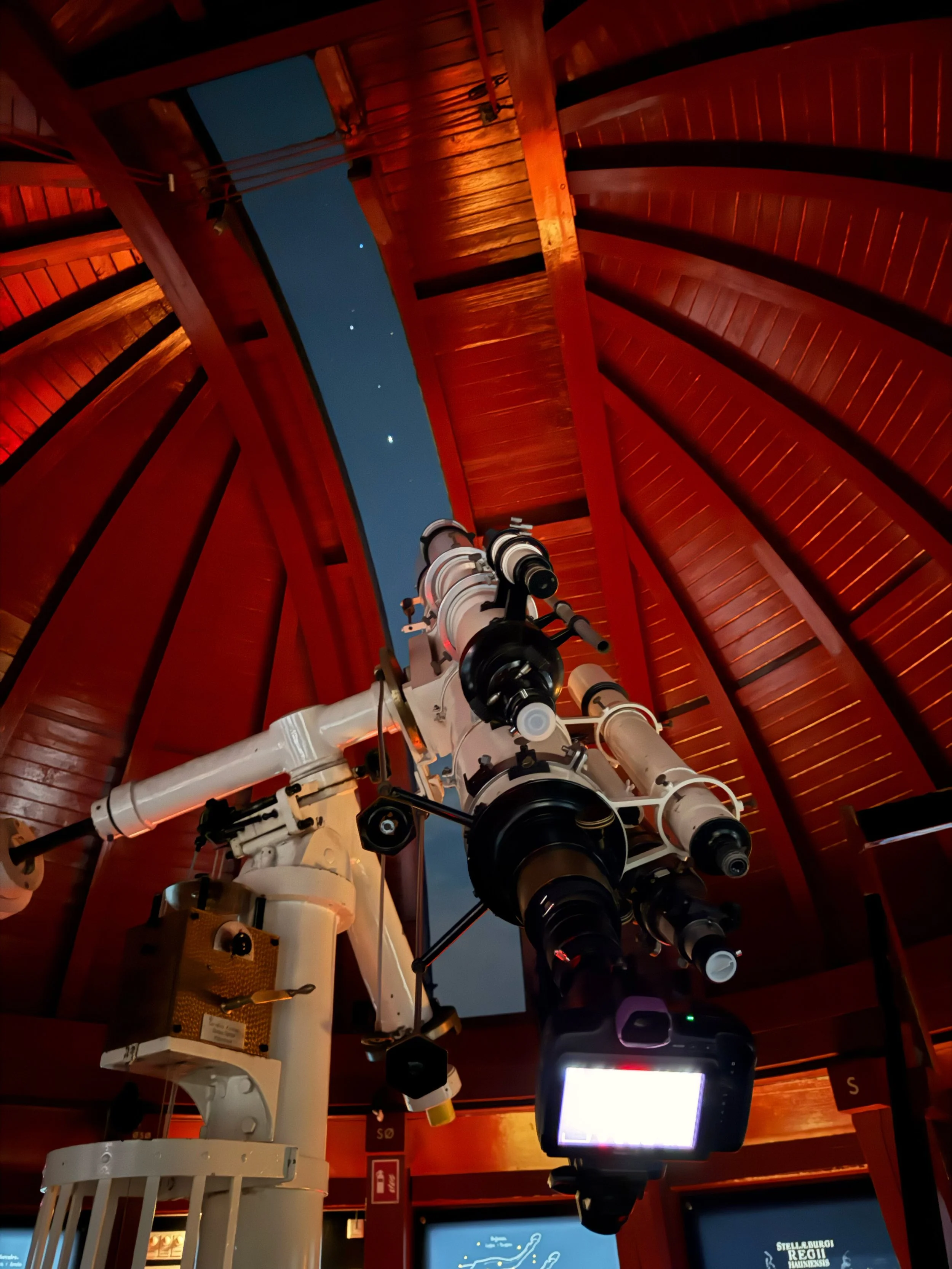
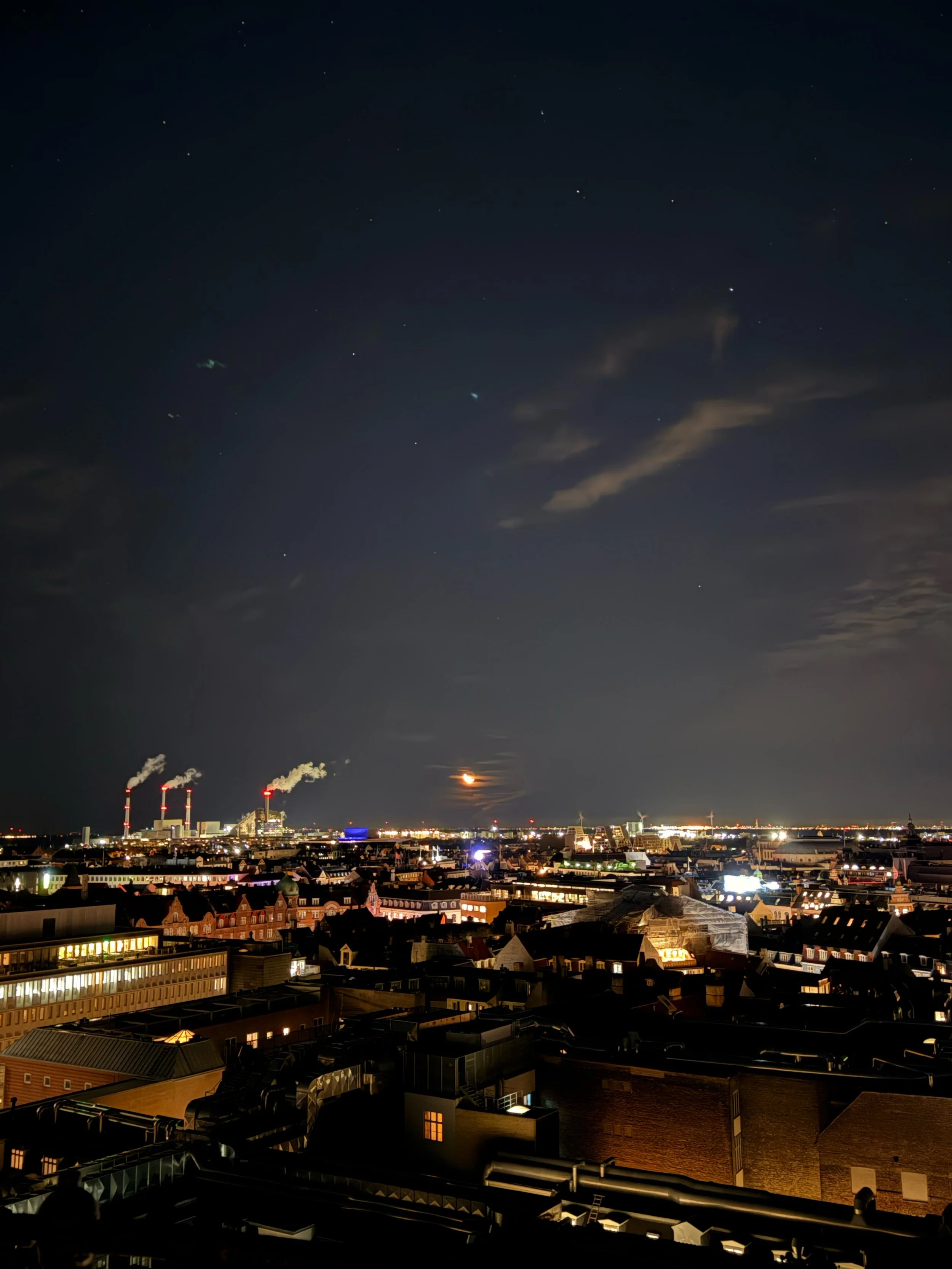
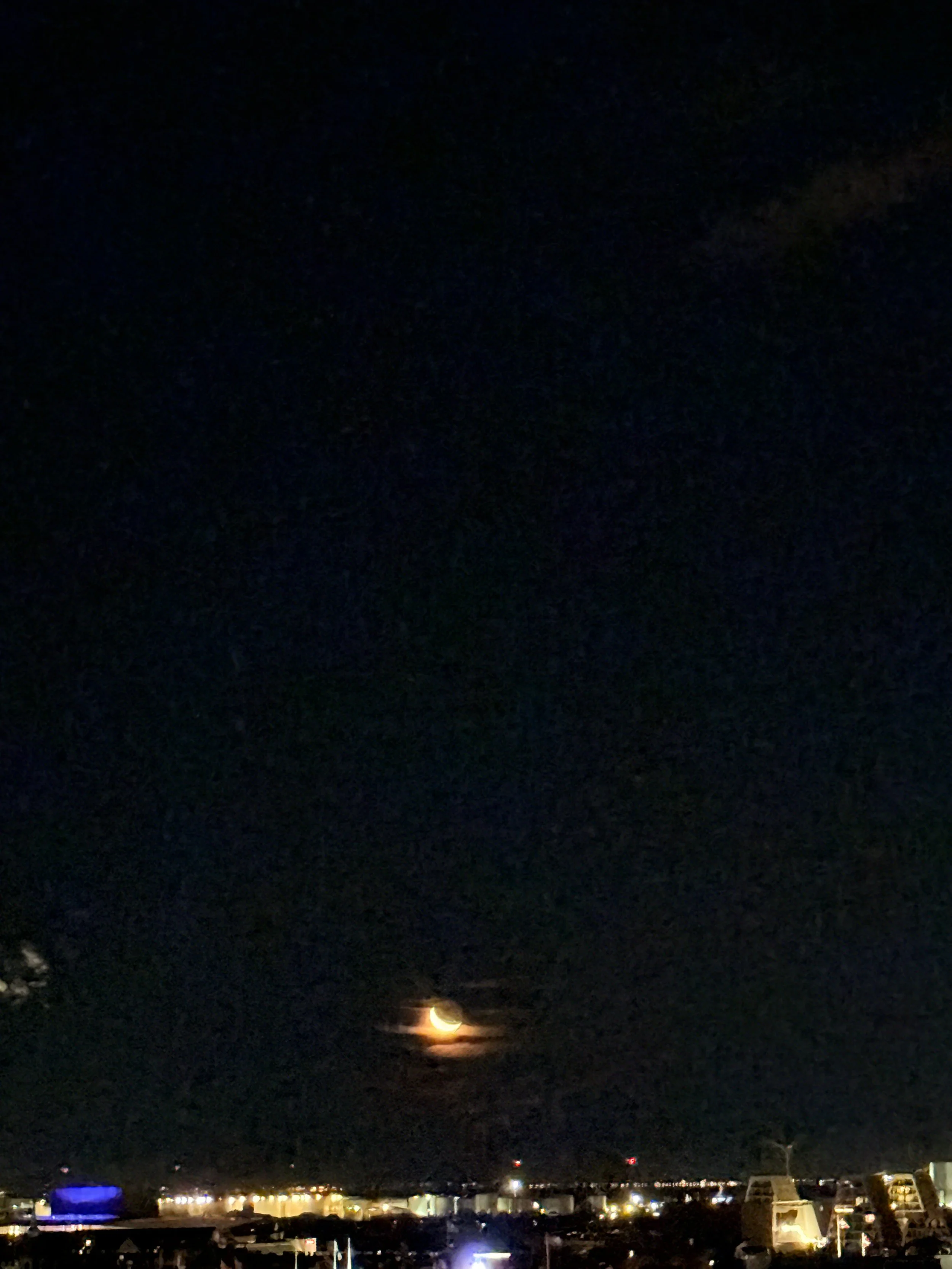
Images from film shoot at Rundetårn Observatory, Jane Jin Kaisen, 2025
Concept and editing: Jane Jin Kaisen. Astrophotography: Guston Sondin-Kung. Music: Lior Suliman. Colorist: Edoardo Rebecchi. Expert Consultancy: Astrophysicist Michael Linden-Vørnle. Location: Rundetårn Observatory. Exhibition design: Kevin Josias. Text development: Pauline Koffi Vandet. Commissioned by Hyundai Translocal Series in partnership with Nam June Paik Art Center and Pinacoteca de São Paulo. With additional support from The Danish Artistic Research Funding Programme, Ministry of Culture.