




CALLING, 2011- ongoing
Photographic series. Ditone prints, back mounted aluminum. European Ash. Edition of 6 + 2 AP. Sizes variable
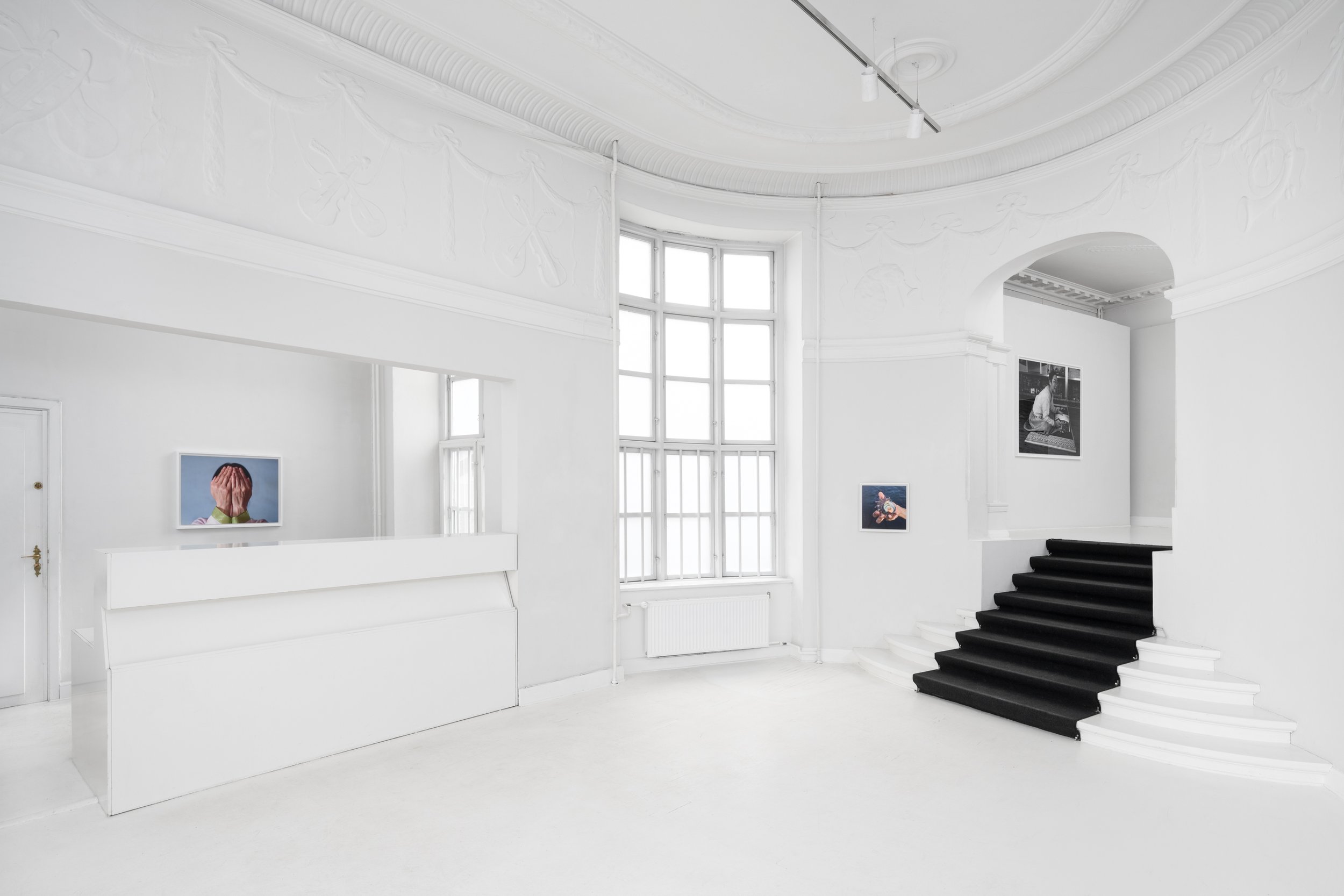
Kaisen has been documenting shamanic rituals on Jeju Island since 2011. Several of the exhibited photographs portray simbang, the Jeju term for shaman, particularly late simbang Koh Sunahn who served as the acting shaman in the hometown of Kaisen’s grandparents. Since Koh passed away in 2019, her daughter Youngme inherited the village shrine and is one of the few hereditary shamans left to recall and transmit the distinct cosmology of Jeju Island. Youngme asked Kaisen to document the village’s vanishing shamanic rituals.
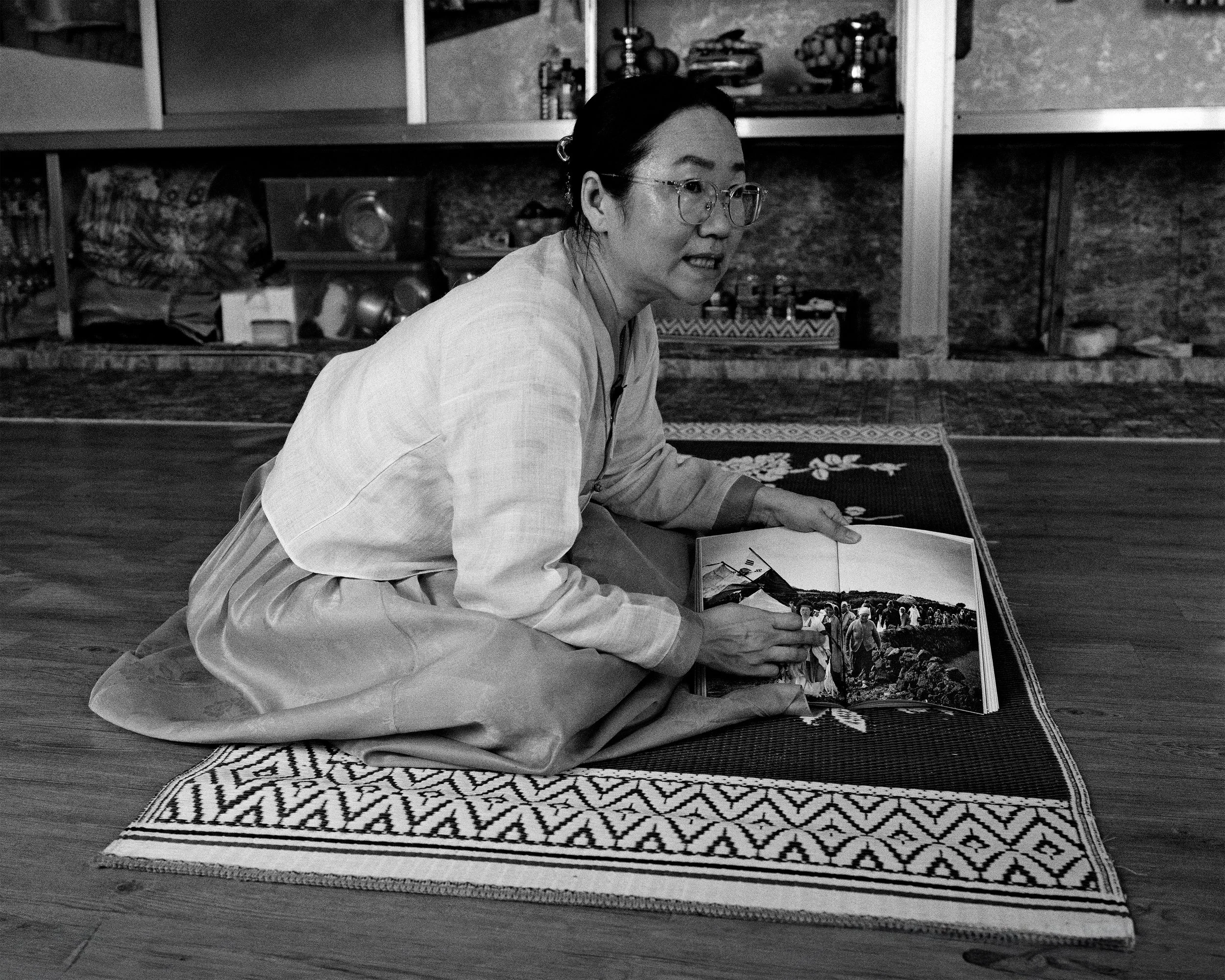
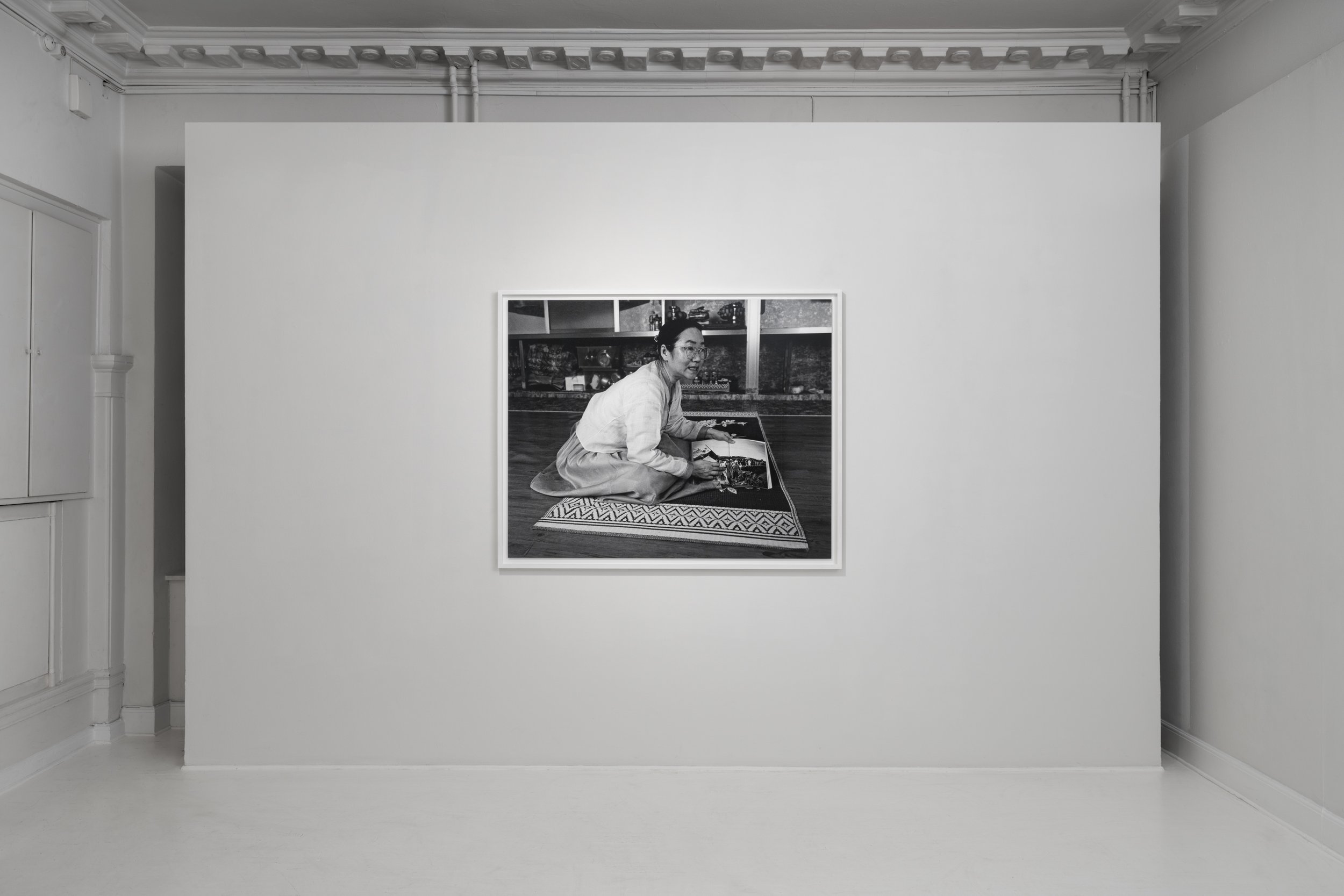
Calling, 2023
Black and White Photograph. 150cm x 113cm
The photograph is taken inside the Hado village Bonhyangdang, the main shamanic shrine for the village tutelary deities. The guardian deities of the shrine oversee the birth and upbringing of babies and haenyeo sea divers who have no descendants, those who are going to sea, or those who go abroad come to visit the shrine. Those who have not been able to give birth, those who have frequently miscarried, and those who have had an abortion also offer sacrifices to the shrine goddess Samsin Halmang. Seated in the center of the image is shaman Song Yougme holding a book and pointing to a black and white photograph by Sunam Kim from 1983. The photograph in the book depicts her mother, late shaman Koh Sunahn performing Yeongdeunggut, a shamanic ritual held every year in early spring to pray for the safety of haenyeo sea divers and for their abundant sea harvest. She is seen surrounded by haenyeo sea divers as she walks down the village road, bringing Bonhyangsin, the tutelary shrine gods from the village shrine to Gaksidang, the shrine of the sea gods. Shamans will often talk about how they were called upon by the spirits to take up their arduous vocation at the borders of social conventions and realms. Integral to the shamanic ritual itself is the calling upon the spirits and deities to gather temporarily with the living for mutual comfort.
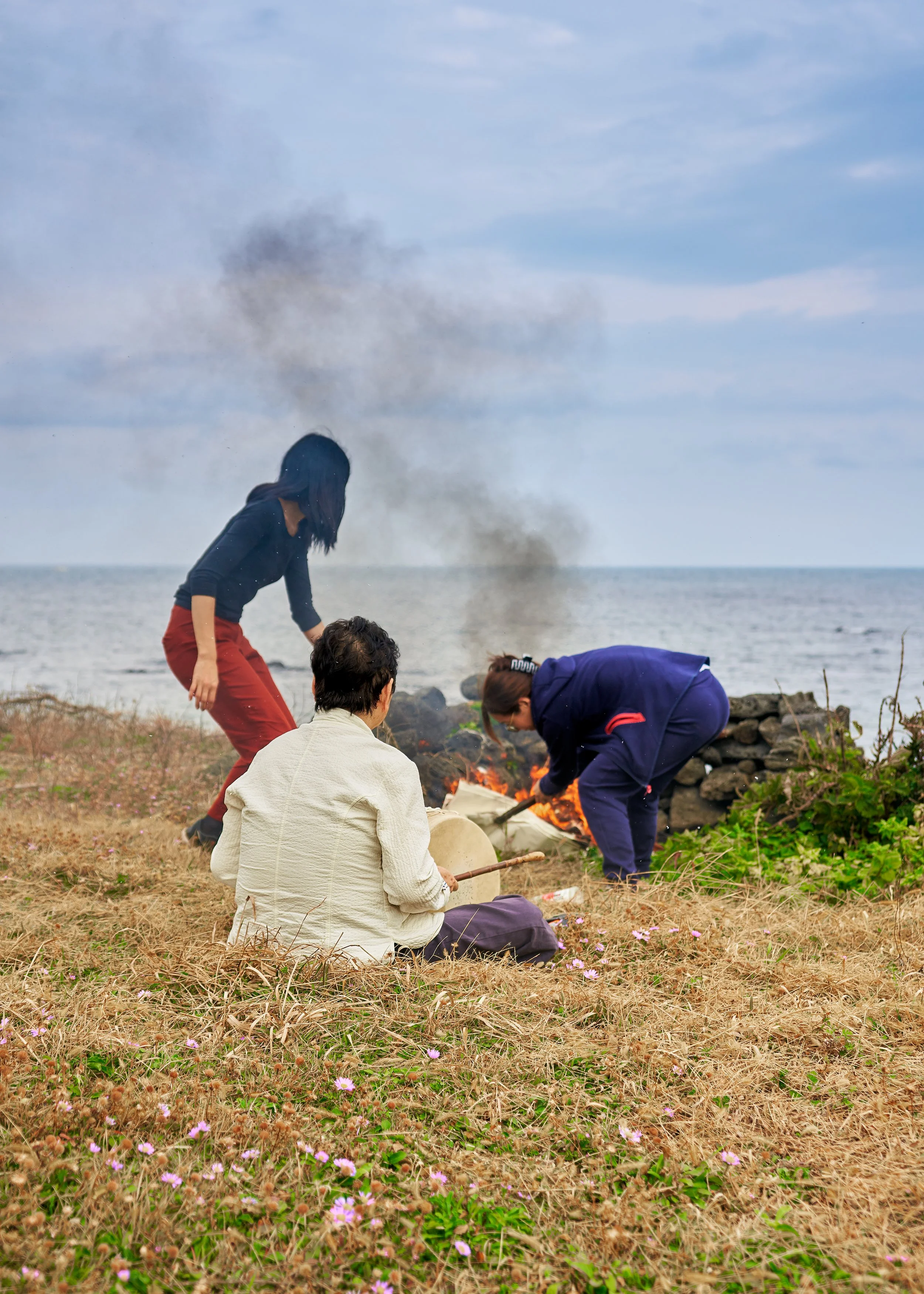
Farewell, 2017
Color photograph. 86cm x 120cm
The photograph portrays the artist together with late shaman Koh Sunahn and her daughter Song Youngme. They are situated by a stonewall fireplace at the seashore of Hado village next to Gaksi-dang, the Shrine for the Sea Gods. This ritual took place on the same day as the ritual depicted in the photograph Neokdurim (Passage), 2017 where the artist’s ancestors were called upon by Koh. In this image by the sea, sacrificial clothes are burned to console the spirits who are playing in front of the sea gods before they are bid farewell.
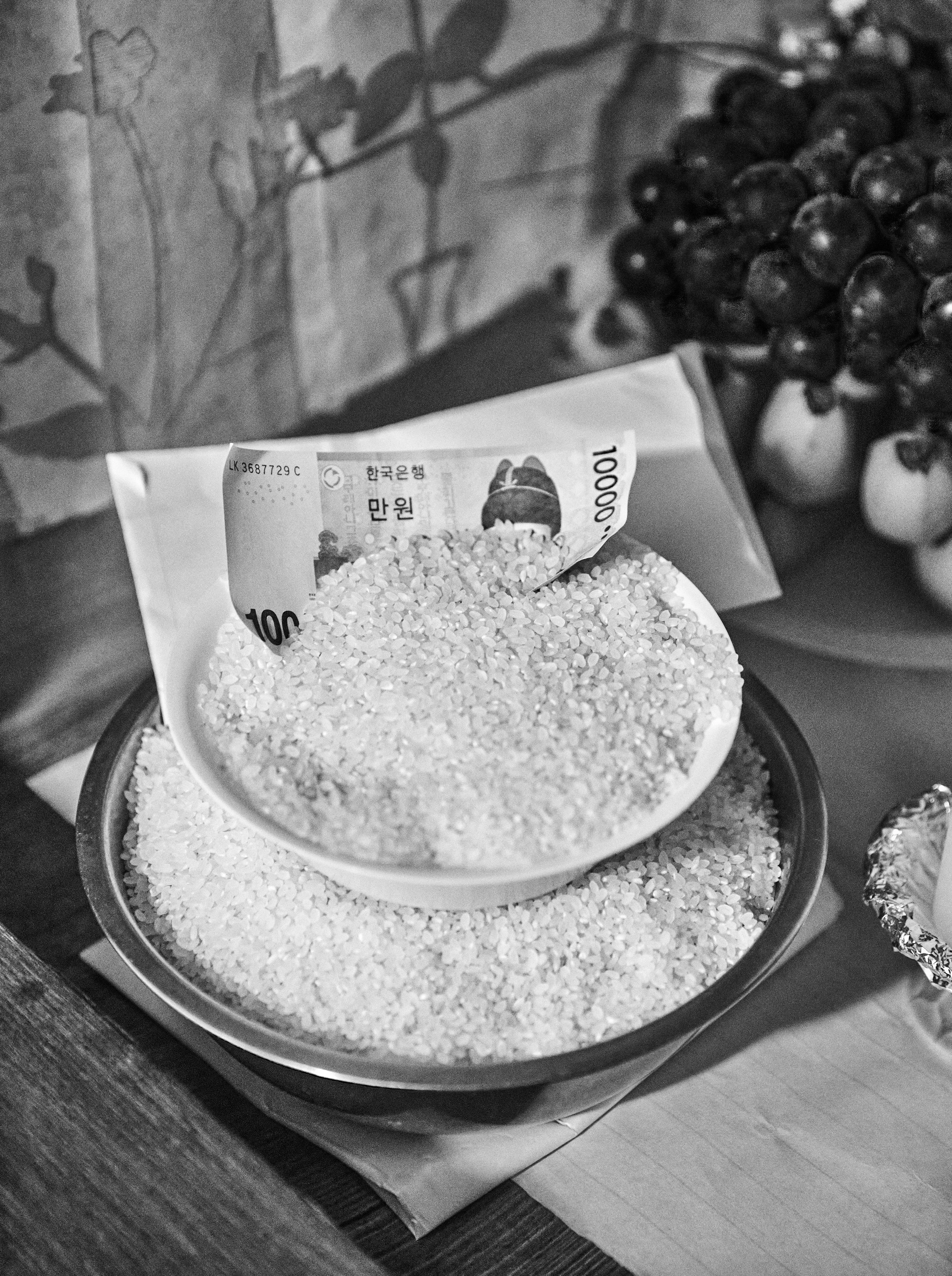
Offering for Koh Sunahn, 2023
Color photograph. 50cm x 67cm
Rice is always served to the ancestral shaman deities at the shamanic shrine. The photograph shows two bowls of rice and an envelope offered by the artist to late shaman Koh Sunahn.
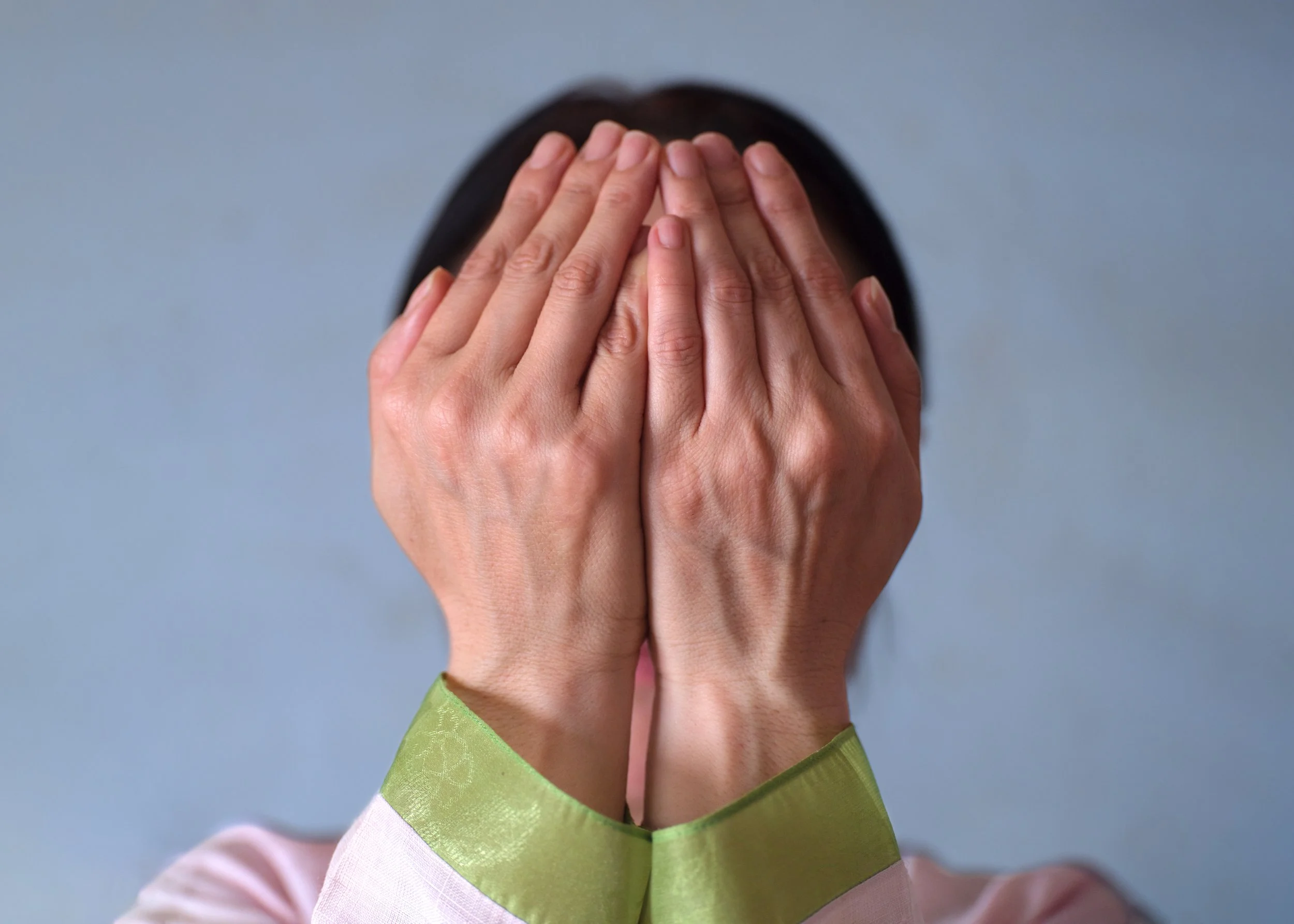
Unveiling, 2023
Color photograph. 80cm x 57cm
Portrait of Simbang Song Youngme in the Hado village Bonhyangdang shrine, the main shamanic shrine for the village tutelary deities.
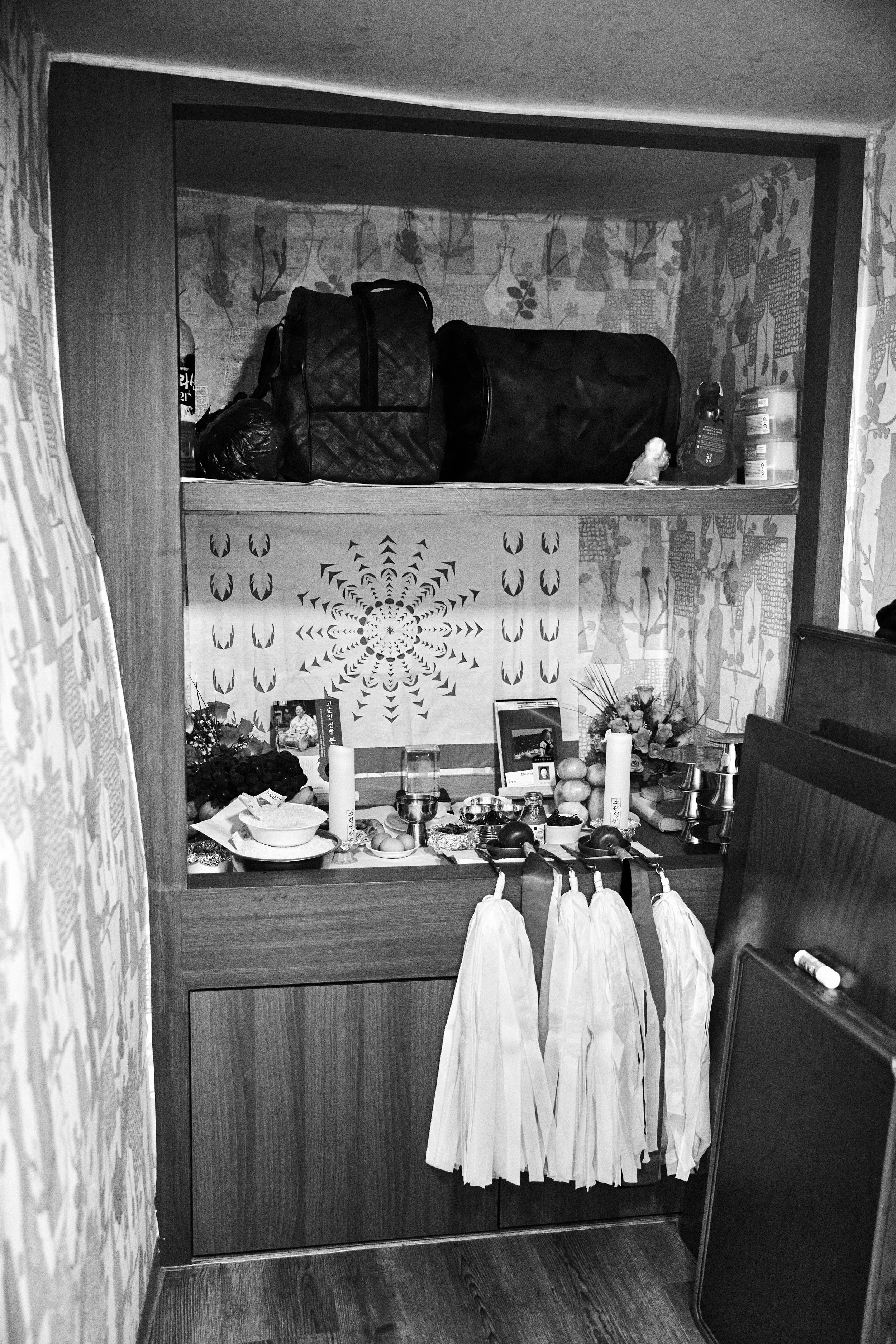
Dangju (Shrine of the Shaman) 2023
Color photograph. 80cm x 120cm
The photograph is taken in late shaman Koh Sunahn’s house and depicts Dangju, a private shrine at the shaman’s house and a place for worshipping the guardian deity and shaman ancestors. Before and after going to the village shrine or performing shamanic rituals, the shaman will always visit her private shrine to thank her shaman teachers and ancestors by serving them fruit, rice, snacks, and other sacrificial gifts. Nowadays, Koh Sunahn’s daughter, shaman Song Youngme regularly visits the shrine to greet her mother and grandmothers, her shaman teachers and ancestors. The shrine contains her mother’s books, instruments, ritual tools, candles, fresh water, and flowers.
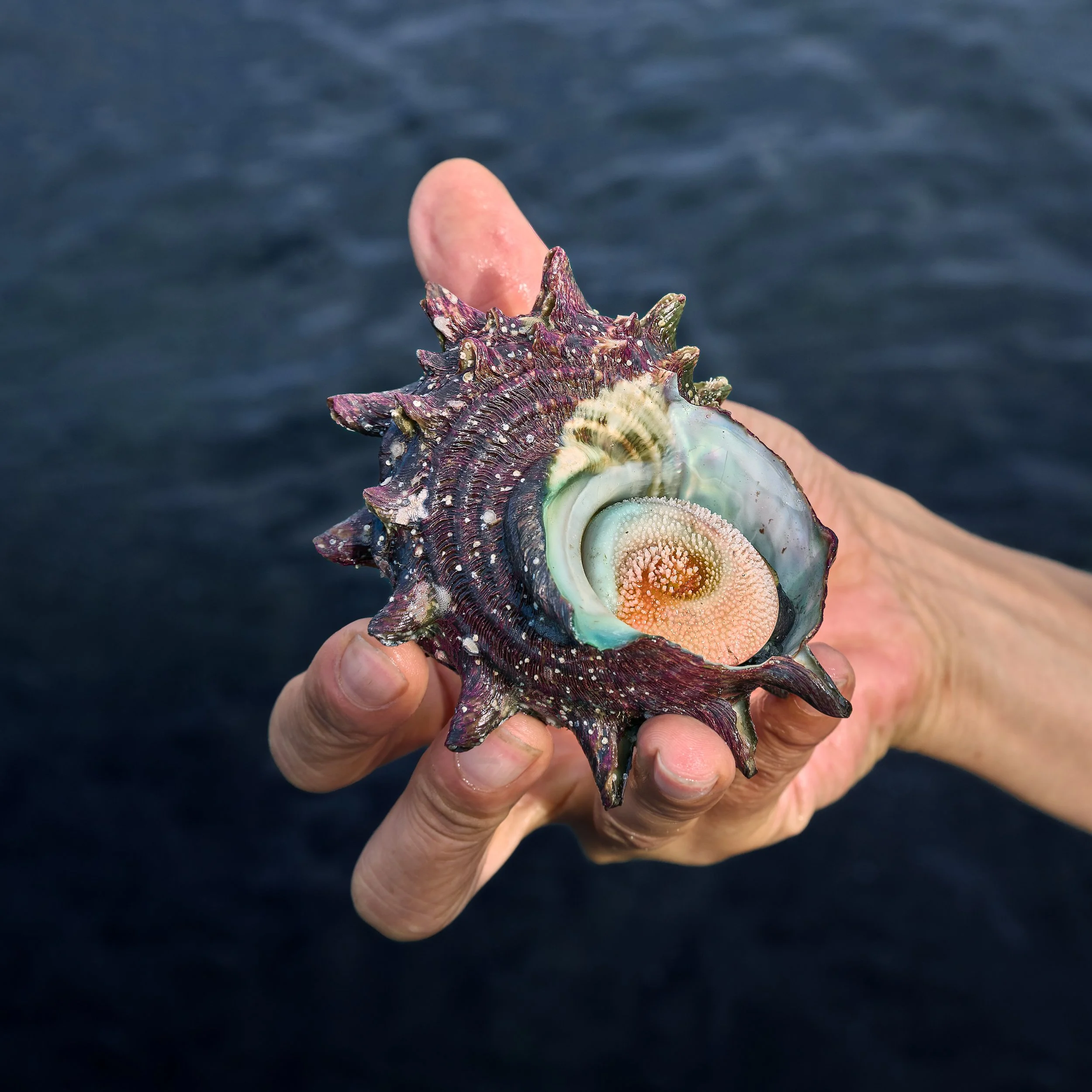
Sora, 2023
Color photograph. 40cm x 40cm
The photograph depicts a closeup image of the artist holding a sora gifted to her by one of the haenyeo sea divers of Hado village. Sora (Turbo cornutus) is a hard, spiny seashell with irregular spiral marks. It develops a hardened operculum, or flap that serves as protection for the sea snail inside. Sora is highly valued by Jeju haenyeo sea divers who harvest them from the sea and use them in local cuisine. When separated from the attached sea snail, the inner side of the operculum reveals a smooth spiral, mirroring its spiral shaped exterior and the spiraling shape of the sora itself. A symbol of the sea, of sustenance and regeneration, and of the spiraling motion of time, sora are offered in Jeju shamanic rituals for the sea goddesses.
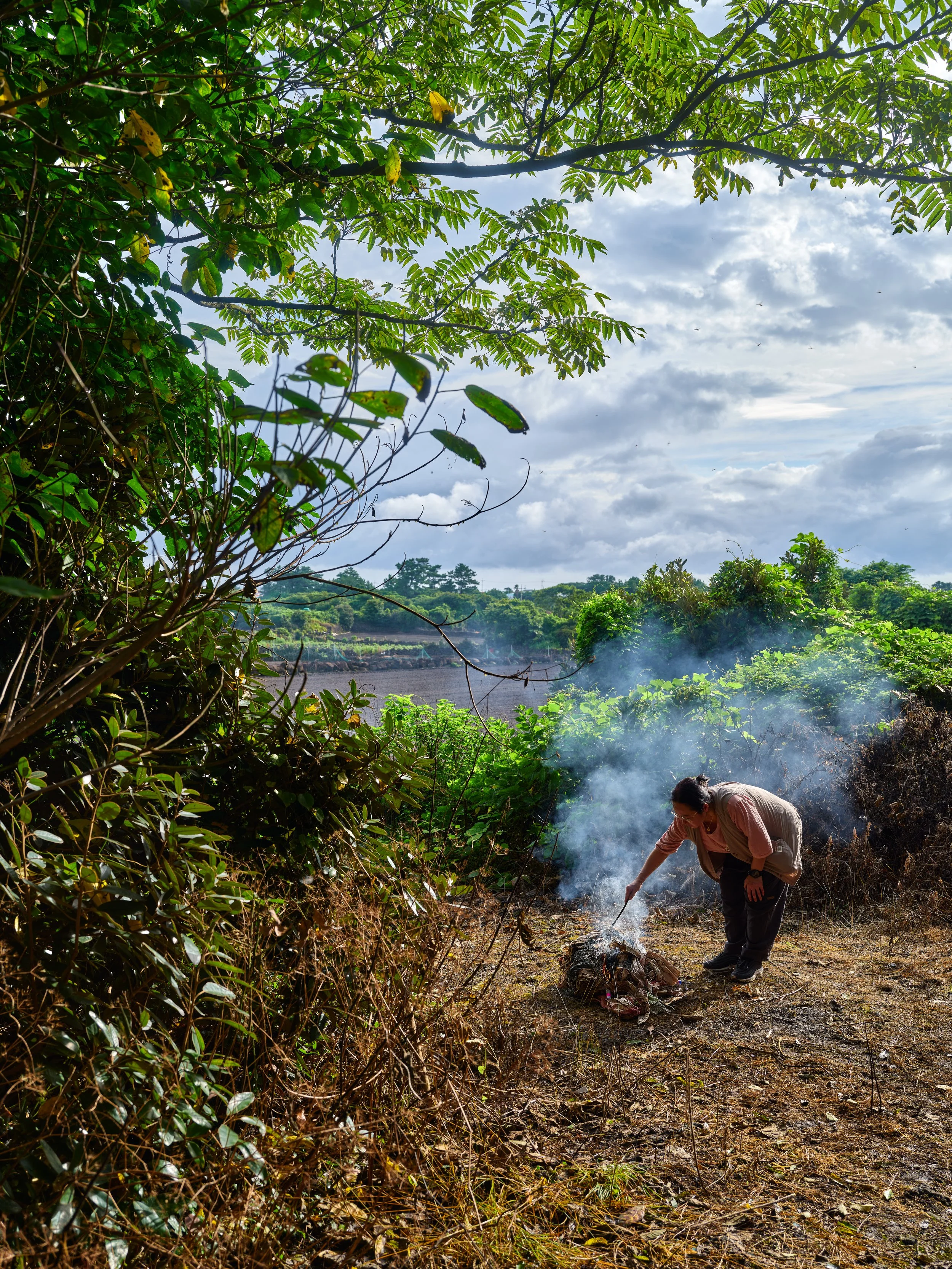
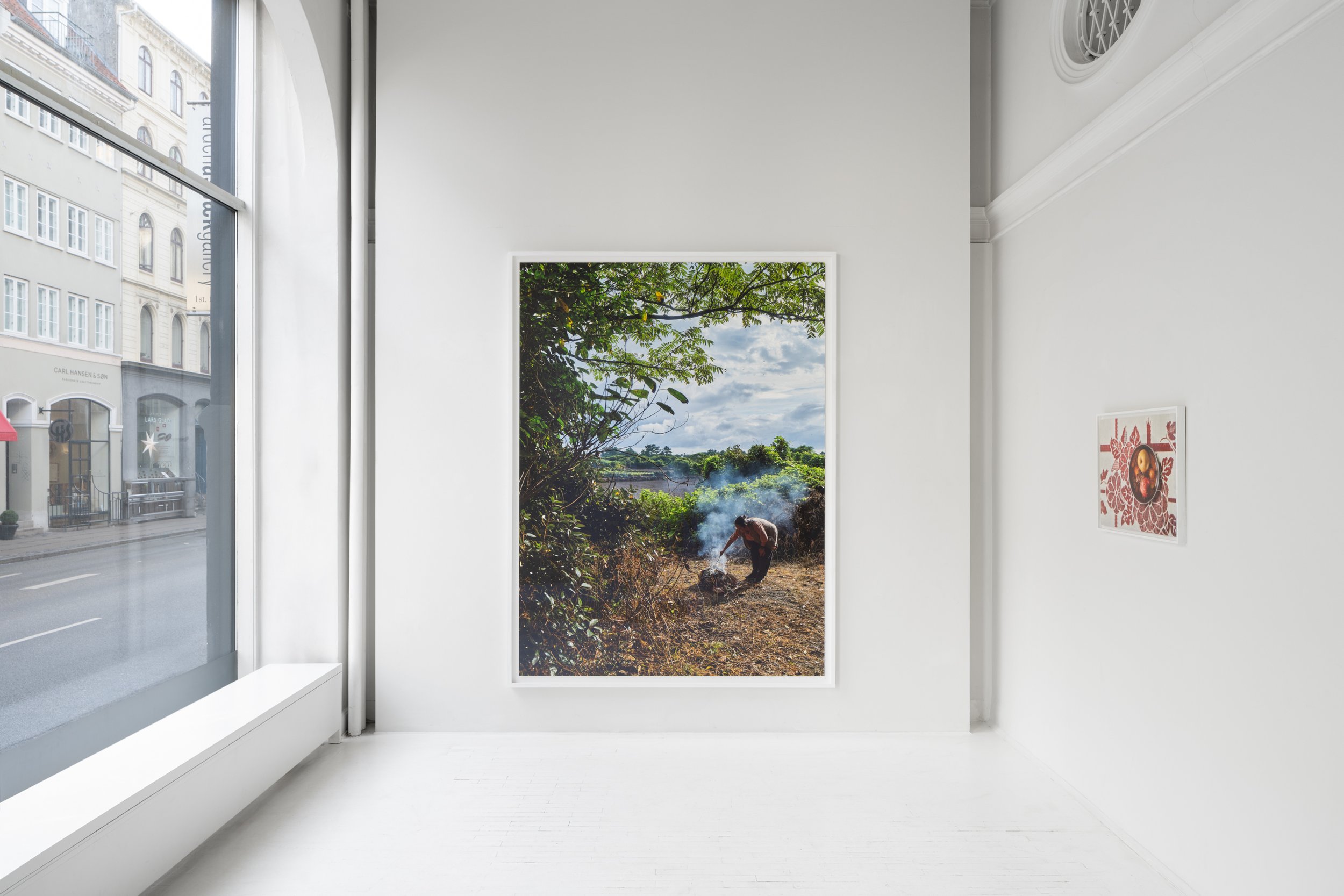
Fire by Illetdang (Seventh-Day Shrine), 2023
Color photograph. 170 x 230 cm
Shamanic rituals at Illetdang, Seventh-Day Shrines, take place on the 7th, 17th, and 27th of each lunar month. The photograph was taken during the Hado Seventh-Day Shrine Ritual on June 7th in the lunar calendar and depicts shaman Song Youngme whom Kaisen has known since 2011 when she began documenting her mother, late shaman Koh Sunahn’s practice. Shamanism is disappearing in Jeju Island and Youngme asked Kaisen to help document the village rituals. Here, Youngme is seen burning old clothing on a fire while new clothes for the shrine goddess have been hung at the shrine in their place, following the cycle of the moon, seasons, and a pattern of disappearance and regeneration.
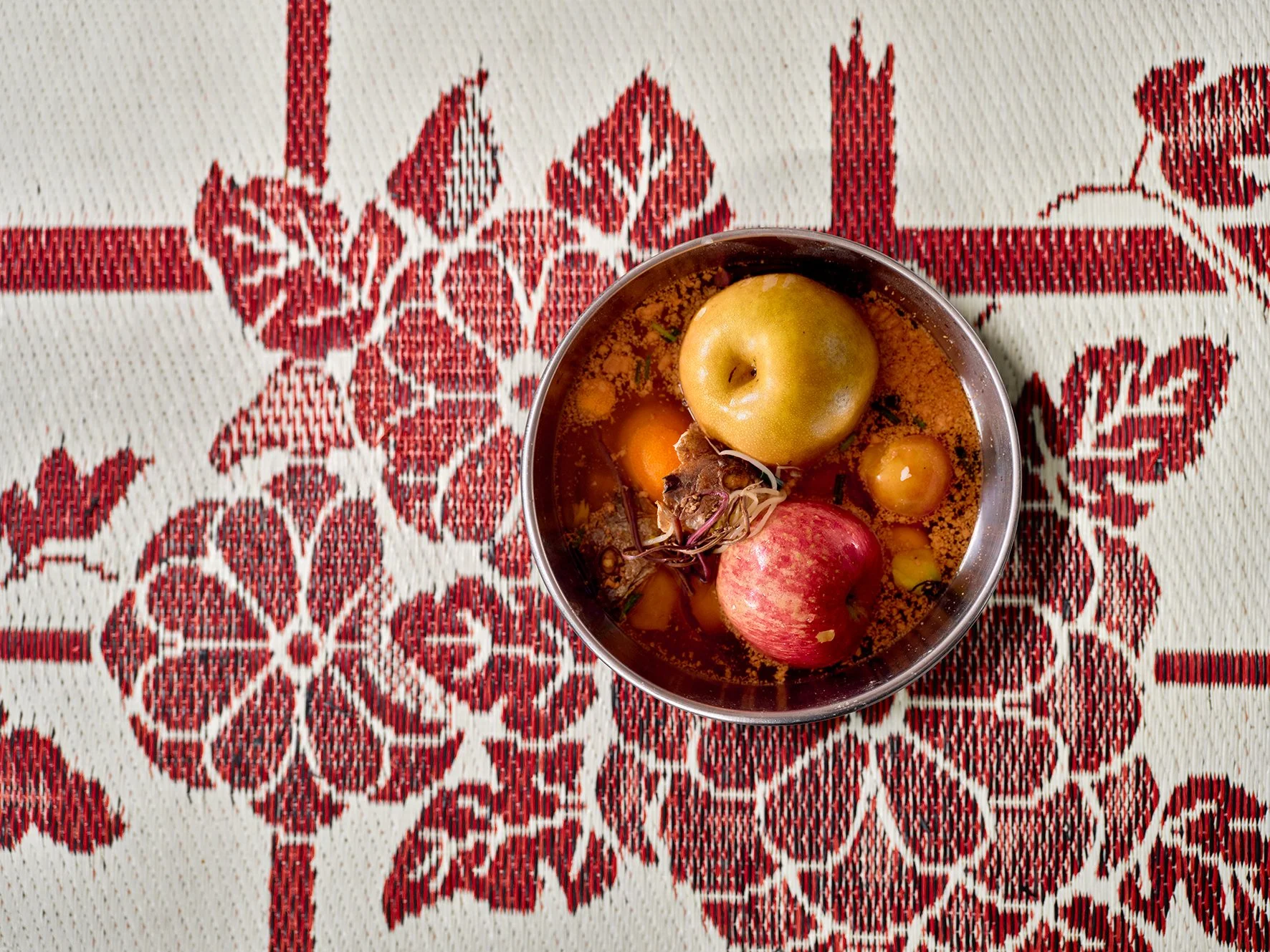
Jabsik (Food for Wandering Ghosts), 2023
Color photograph. 60cm x 45 cm
The photograph was taken at a ritual for Samsin Halmang, the Hado village tutelary deity. At the end of shamanic rituals in Jeju Island, jab-sik, the gathering of pieces of all the food used for the ritual, is performed. The food is gathered in a bowl, then divided into small portions, and thrown onto the roof or the street as an offering for Gun-jol, all the wandering ghosts in this world, to eat. The culture of sharing, along with the intention to cleanse the ancestral spirits when they descend, is ingrained in jab-sik. It is said that if you throw the sacrificial food on the roof or in the side of the entrance, a crow will come and peck it the next day, connecting the human, animal, and spirit worlds.
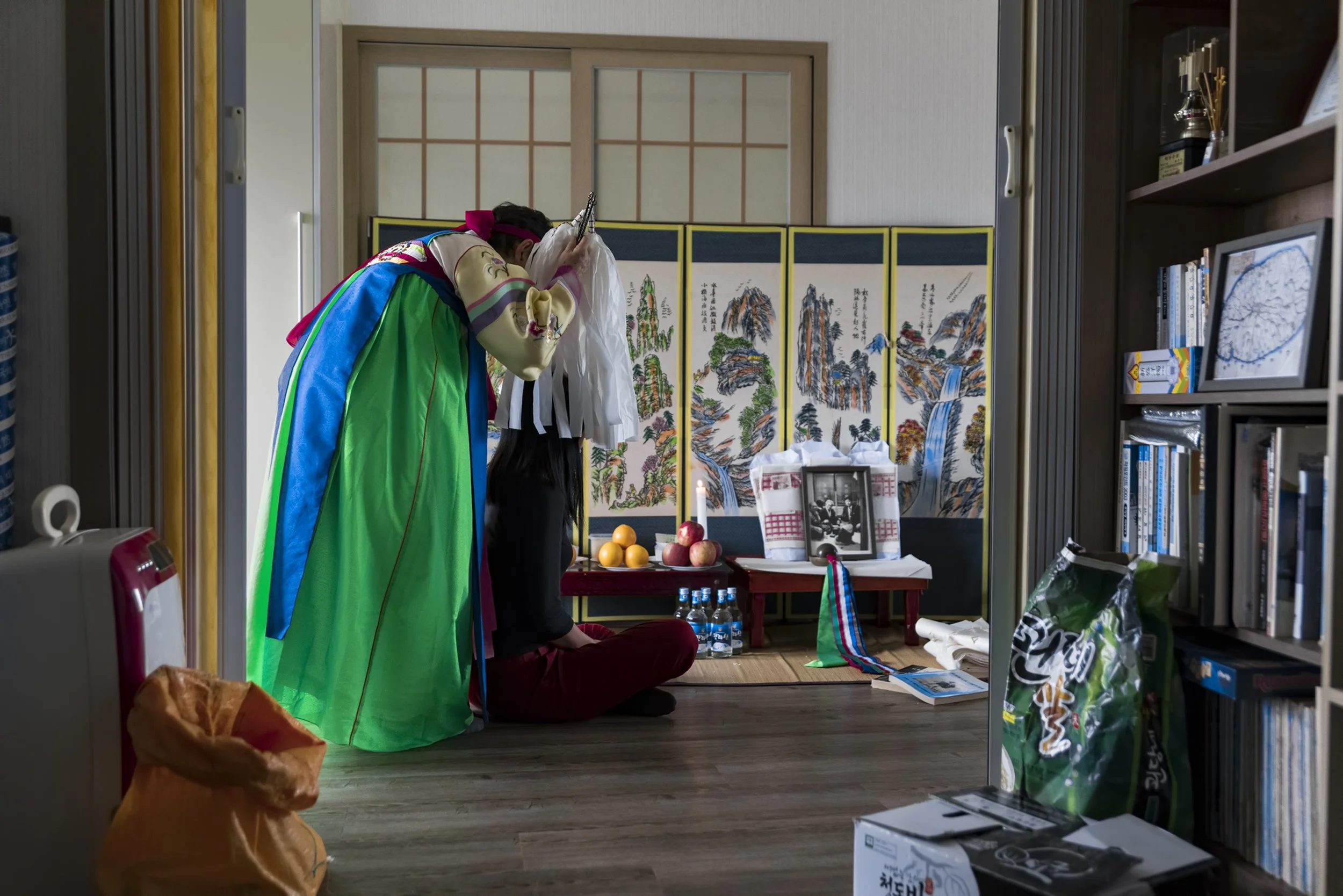
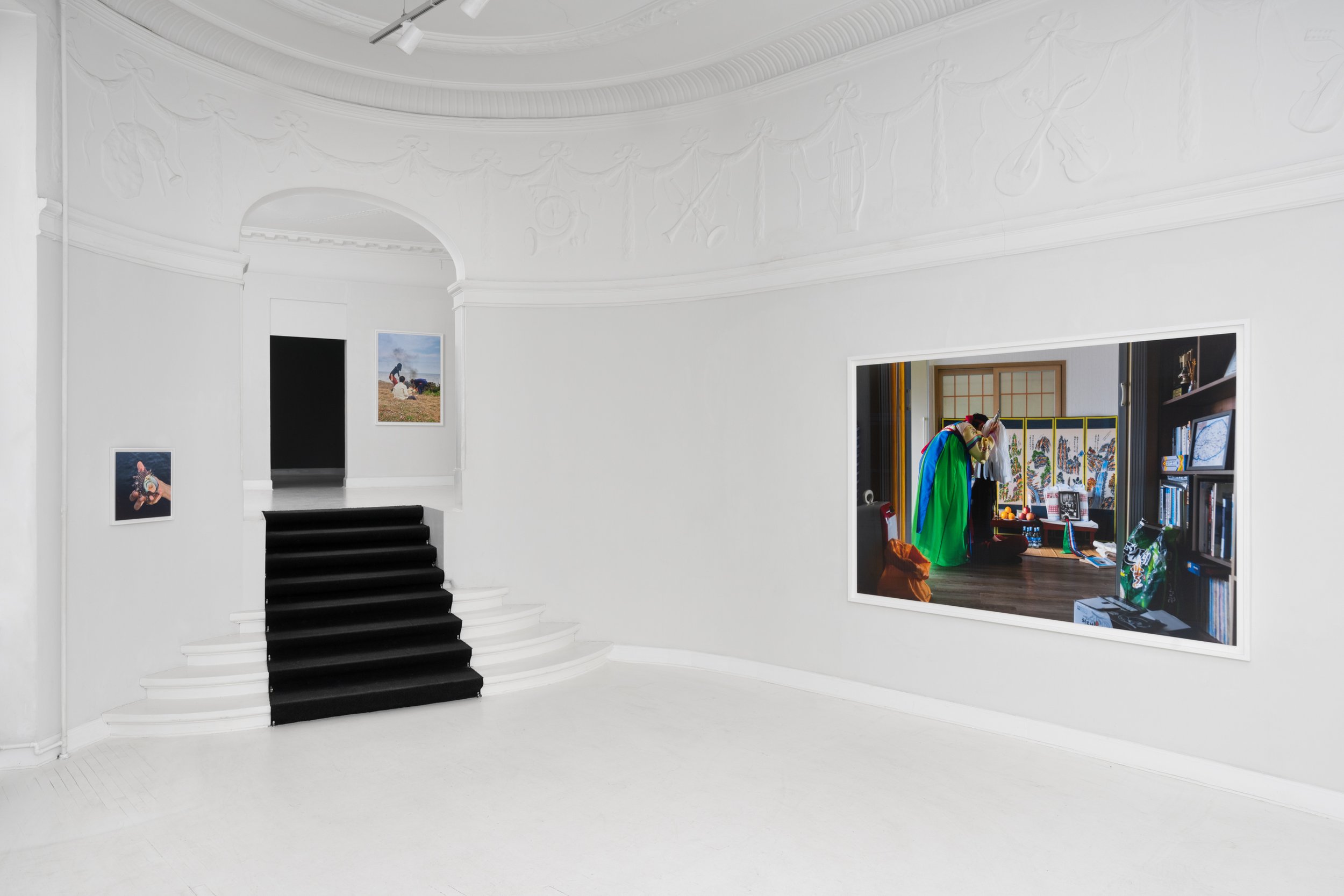
Neokdurim (Passage), 2017
Color photograph. 221,8 x 148 x cm.
Simbang Koh Sunahn of Jeju Island is seen together with the artist who is seated on the floor; behind them is a folding screen decorated with a Korean mountain scene. The Korean grandparents of the artist appear in a black-and-white photograph on the low table, which also contains offerings in the form of oranges and apples on small brass plates. The bookcase contains a map of Jeju Island in South Korea, which is the birthplace of Kaisen and the shaman alike.
A simbang is a shaman or spiritual guide who mediates between the living and the dead, thereby establishing a temporary connection. In the photograph, simbang Koh Sunahn is performing neokdurim (넋들임), a shamanic ritual segment of recalling the lost souls. People are said to lose their soul when they are sick, but once the shaman expels these lesser evil spirits (pudasi), the body will return to a very clean and pure state and then the lost soul is taken back. The neokdurim thereby marks a transition: the reunion of soul and body.